
{title}
{publish}
{head}

Promoting heritage values and transforming cultural resources into economic value represent crucial orientations within Phu Tho province’s sustainable development strategy. On the foundation of converging distinctive cultural spaces following consolidation, the province is concentrating on innovating mindsets, linking preservation with tourism development and cultural industries—step-by-step making culture an endogenous driver of growth.
From Heritage Depths to Development Advantages
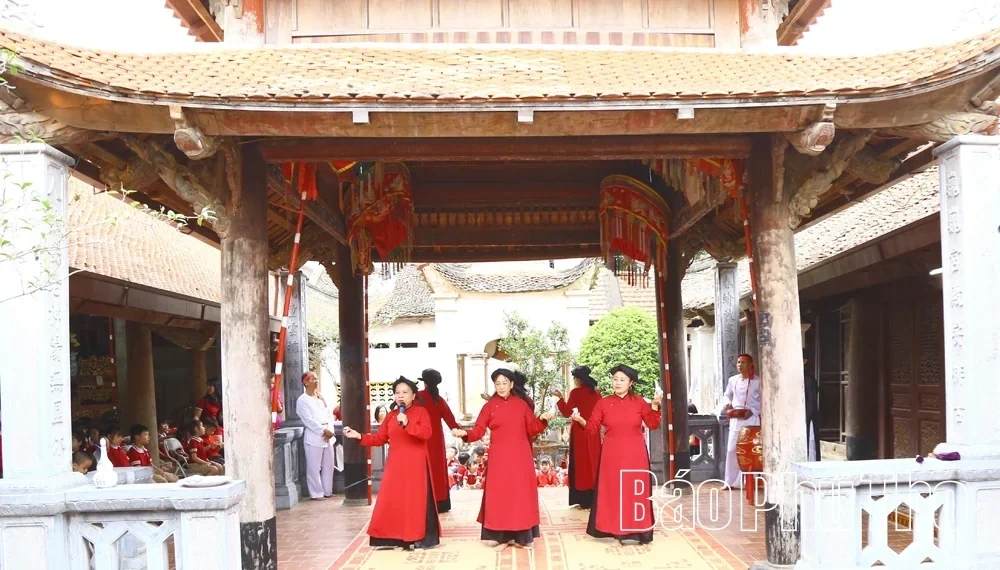
Hung Lo ancient village, Van Phu ward preserves Hat Xoan heritage, making vital contributions to attracting tourists for sightseeing and experiences.
The consolidation of Phu Tho, Vinh Phuc, and Hoa Binh opens up new development spaces, converging the distinctive cultural values of the Ancestral Land region, traditional beliefs, festivals, craft villages, and the unique Muong cultural treasure. This serves as an important resource for the province to promote its identity, creating advantages in developing tourism, services, and cultural industries.
Phu Tho hosts 2,778 relics, among which 980 are ranked—including 6 special national relics, 176 national relics, and 798 provincial-level relics; 6 National Treasures alongside nearly 2,000 intangible cultural heritages. The province boasts 5 UNESCO-inscribed heritages, including the Worship of Hung Kings, Phu Tho Xoan Singing, Tug of War Rituals and Games, Ca Tru, and Practices Related to the Viet Beliefs in the Mother Goddesses of Three Realms. The Mo Muong heritage dossier has been completed and submitted to UNESCO. This rich heritage treasure provides the foundation for the province to form diverse tourism products, connecting culture with nature and resorts. From the Hung Temple Special National Historical Relic Site, Xoan Singing spaces, Mo Muong, and Muong Gongs to Xuan Son National Park, Tam Dao–Tay Thien, Hoa Binh Lake, and Long Coc tea hills, every destination possesses unique values for exploitation and promotion.
Practical realities demonstrate that when heritage is linked with contemporary life, cultural values spill over while generating additional livelihoods for residents. The Hung Kings Commemoration Day – Hung Temple Festival carries special significance not only in the spiritual life of compatriots nationwide, but also attracts tourists, driving commercial, service, accommodation activities, and promoting the homeland’s image.
In Hung Lo ancient village, Xoan Singing is connected with ancient communal house experiences, visiting ancient houses, exploring craft villages, and enjoying traditional cuisine. The tourism model linked with ancient village Xoan Singing contributes to bringing heritage closer to tourists, creating environments for practice and teaching for younger generations while opening up local economic development opportunities. Craft villages such as Huong Canh pottery, Sai Nga conical hats, Muong brocade weaving, Ly Nhan blacksmithing, and Bich Chu carpentry also serve as resources to develop handicraft products, souvenirs, and tourism experiences. Connecting craft villages with local destinations and services will contribute to diversifying products and elevating Phu Tho tourism’s appeal.
However, exploiting cultural resources remains uncommensurate with potential. Investment in culture and relic restoration remains limited; grassroots cadre quality is uneven; performing arts human resources are lacking and aging. Digital transformation, developing cultural industry products, and linking heritage with tourism have not met requirements... This demands synchronized solutions from the province, ensuring citizens act both as preservers of heritage and beneficiaries from the cultural promotion process.
Innovating Mindsets, Unlocking Cultural Resources
Identifying culture as a spiritual foundation and vital endogenous resource for sustainable development, Phu Tho province concentrates on concretizing Party orientations through practically aligned programs and plans. The province deploys Resolution No. 80-NQ/TW of the Politburo on Vietnamese cultural development alongside resolutions, programs, and plans on cultural and artistic development. The Provincial People’s Committee issued the Scheme on Developing Phu Tho’s Culture and People for the 2026–2030 Period, Vision to 2045, and the Strategy for Developing Vietnam’s Cultural Industries to 2030, Vision to 2045 across the province. The Provincial People’s Council issued support mechanisms for heritage preservation and promoting grassroots cultural and artistic movements—creating bases to turn orientations into specific tasks linked with resources and execution efficiency.
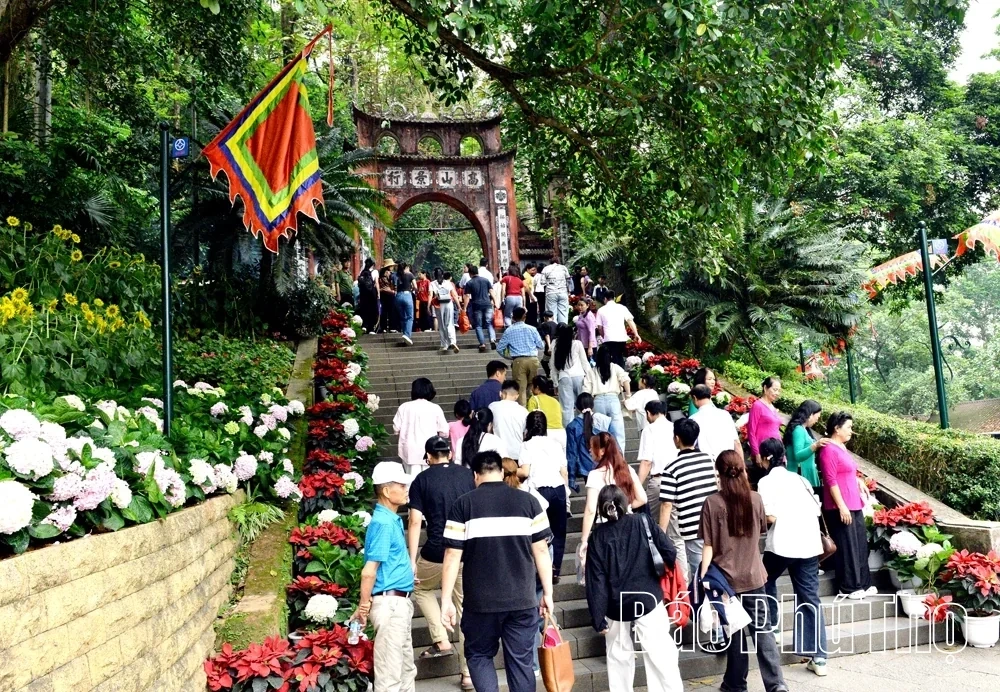
On annual Hung Kings Commemoration Day occasions, numerous domestic and international tourists arrive to offer incense in memory of the Hung Kings.
Director of the Department of Culture, Sports and Tourism Duong Hoang Huong emphasized: Culture has consistently been identified by the Party and State as the spiritual foundation of society and the driving force for sustainable development. The Cultural sector is undergoing strong innovation, tightly linking cultural, sports, and tourism activities with socio-economic development.
Accordingly, the province focuses on preserving and promoting the values of the Hung Temple Special National Historical Relic Site, the Worship of Hung Kings, Phu Tho Xoan Singing, Mo Muong, and Muong Gongs; while linking heritage management with tourism, services development, and digital technology applications. Development mindsets shift toward linking preservation with creation, and heritage promotion with livelihood generation. Digital technology and creative products need effective application in heritage promotion, providing information, expanding markets, and connecting tourism services. Concurrently, the province steps up tourism route linkages, leveraging regional advantages to form identity-rich products. Connecting spiritual destinations, craft villages, and ethnic hamlets with eco-tourism and resorts will create convenient experience itineraries, encouraging tourists to extend their length of stay, thereby increasing benefits for enterprises and local communities.
For culture to truly become a growth engine, Phu Tho continues perfecting mechanisms and policies; prioritizing cultural institution investment; elevating cadre team quality, and extending care and rewards to artisans and artists. Concurrently, step up traditional art instruction and heritage education in schools, while encouraging residents to join in developing tourism products. The province selects advantageous cultural industry sectors, encouraging enterprises and young creative forces to develop products derived from heritage, folk arts, gastronomy, and indigenous knowledge. Digital transformation targets substantive efficiency—from document digitalization and building heritage databases to destination promotion and elevating tourist service quality...
With a rich heritage foundation, the convergence of cultural spaces, and concrete solutions deployed, Phu Tho possesses conditions to forge a unique identity, elevate destination appeal, and inspire and unleash resources driving rapid, sustainable growth.
Huong Lan

baophutho.vn New vitality from the heritage source of the Lo river

baophutho.vn In Sung Bai village, Cao Son commune — a concentrated living area of the Dao Tien ethnic group — local residents still preserve distinct...

baophutho.vn Thai stilt houses

baophutho.vn Listening to the heartbeat of the great forest

baophutho.vn Located in Hy Cuong commune, Co Tich Communal House is one of the cultural and religious structures deeply attached to the spiritual life of...

baophutho.vn Khap singing - Tradition of the Thai ethnic community

baophutho.vn Phu Tho Culture Express - Stories from Muong hamlets

baophutho.vn By combining traditional blacksmithing techniques with modern machinery, production establishments in Ban Mach hamlet, Vinh Phu commune, Phu...

baophutho.vn Phu Tho Culture Express - Hoa Binh lake opens up new path to the future

baophutho.vn Phu Tho Culture Express - Humble countryside gifts
Editor-in-chief: Vi Manh Hung
License No.154/GP-BTTTT dated March 3,2022 by the Ministry of Information and Communications.
Address : No.Nguyen Tat Thanh street, Viet Tri ward, Phu Tho province
Tel: (0210) 3846.508; (0210) 3855.303
Email: info@baophutho.vn
Website: baophutho.vn
Copyrights Phu Tho Newspaper; All rights reserved
