
{title}
{publish}
{head}

Phu Tho is a land rich in cultural and historical heritage, home to numerous artifacts, relics, and national treasures of exceptional value. These objects are carefully preserved in museums, traditional houses, historical and cultural sites, and archaeological sites scattered across the region. The preservation and promotion of these artifacts and relics are always prioritized by the cultural sector and local governments to serve scientific research, traditional education, and the promotion of the image of the people and the Ancestral Land.
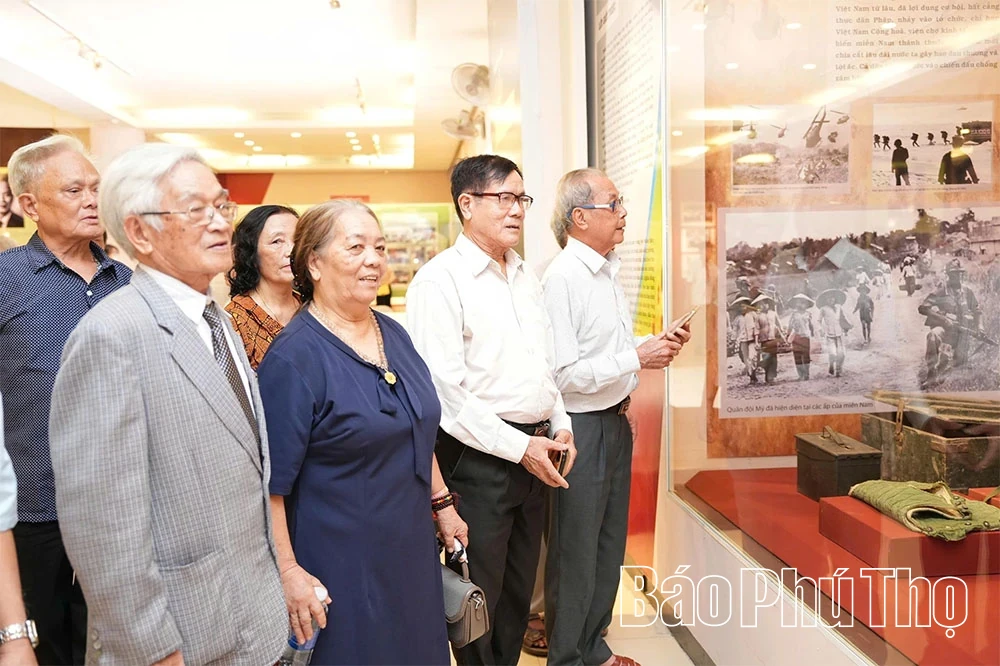
The Hung Kings Museum, Facility 2, currently houses many valuable artifacts and documents, attracting a large number of visitors both from within and outside the province.
Within the province’s cultural framework, Hung Kings Museum, Facility 2 plays a central role in collecting, researching, cataloging, preserving, and showcasing Phu Tho’s cultural heritage.
Currently, Hung Kings Museum, Facility 2 houses over 21,500 artifacts, documents, and images. Among these, there are especially valuable collections, such as two sets of human remains from the Phung Nguyen culture, ceramic and porcelain items typical of the Dong Dau culture, and the national treasure, the glazed ceramic tower of Chua Tro. The permanent exhibition system includes 1,518 artifacts spread over nearly 1,800 square meters, offering visitors a comprehensive view of the cultural and historical development of the Ancestral Land from prehistory to the modern era. Additionally, the museum organizes dozens of specialized exhibitions with diverse content and mobile exhibitions in various localities to bring the heritage closer to the public.
According to the Department of Culture, Sports, and Tourism, these artifacts, relics, and especially the national treasures, not only have research value but are also invaluable spiritual assets of the Vietnamese people. In addition to the storage system at Hung Kings Museum, Facility 2, thousands of precious artifacts are being preserved in traditional houses, historical and cultural sites, and archaeological sites across the province. Exhibiting and explaining these artifacts not only helps the public gain a better understanding of their roots but also enriches the spiritual life of the people, promotes the development of tourism linked with the preservation of traditional cultural heritage.
Le Minh

baophutho.vn “Sac bua” - A spring blessings

baophutho.vn In the traditional cultural space of the Muong people, the hearth is not merely a place for cooking or warmth; it is the sacred heart of every...

baophutho.vn The Tro Tram Festival (also known as the Linh Tinh Tinh Phoc Festival), held on the 11th and 12th days of the first lunar month in Phung Nguyen...

baophutho.vn On February 26 (the 10th day of the first lunar month), Mai Ha Commune solemnly and joyfully organized the 2026 Xen Muong Festival. Attendees...

baophutho.vn Hung Lo Ancient Communal House

baophutho.vn On the morning of February 28 (the 12th day of the first lunar month, Year of the Horse), Ms. Phung Thi Kim Nga — Member of the Provincial...

baophutho.vn On February 27 - 28 (the 11th and 12th days of the first lunar month, Year of the Horse), Hy Cuong Commune solemnly organized the restoration...

baophutho.vn Unique culinary culture of ethnic communities

baophutho.vn The festival takes place at the Dan Tich Dien historical site (now in Viet Tri Ward)—a location associated with the legend of the Hung Kings...

baophutho.vn The legend of the Lady of the forest of Tam Dao
Editor-in-chief: Vi Manh Hung
License No.154/GP-BTTTT dated March 3,2022 by the Ministry of Information and Communications.
Address : No.Nguyen Tat Thanh street, Viet Tri ward, Phu Tho province
Tel: (0210) 3846.508; (0210) 3855.303
Email: info@baophutho.vn
Website: baophutho.vn
Copyrights Phu Tho Newspaper; All rights reserved
