
{title}
{publish}
{head}

The rich and distinctive treasure trove of intangible cultural heritage serves as a vital resource for tourism development, creating a unique appeal for the Ancestral Land region. However, how to exploit heritage in a way that simultaneously promotes its values, creates livelihoods for the community, and preserves and safeguards traditional cultural identity poses practical demands.
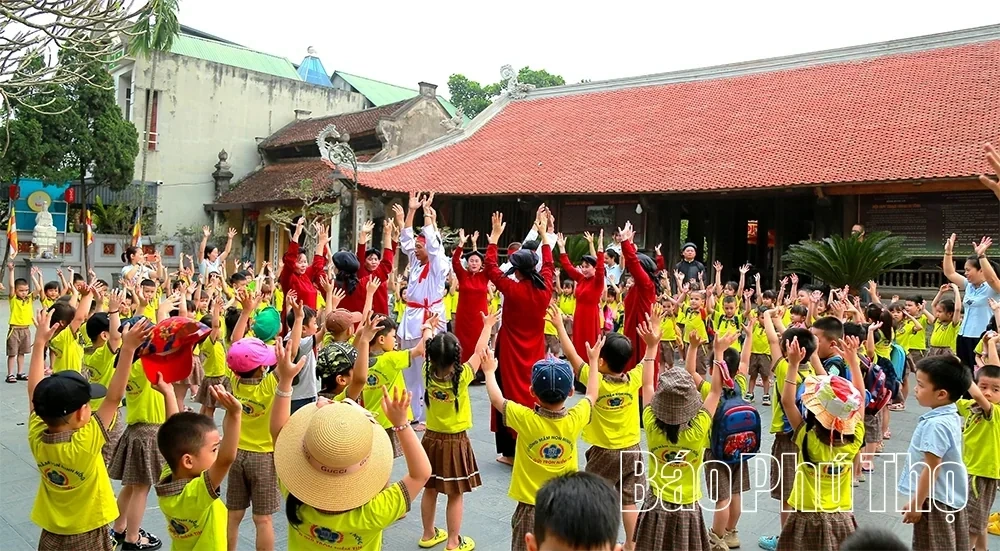
Passing down heritage to the younger generation through experiential tourism activities at Hung Lo Communal House — a solution contributing to preserving and promoting the value of Phu Tho Xoan Singing in contemporary life.
Phu Tho currently preserves over 800 traditional festivals, nearly 200 forms of folk performing arts, alongside hundreds of unique social customs and folk knowledge. Particularly, the Ancestral Land region possesses 5 UNESCO-inscribed heritages alongside numerous national intangible cultural heritages. From the Xoan Singing melodies of the 4 original Xoan guilds and Gheo Singing of the Nam Cuong – Tam Nong area to the bell dance, turtle dance, or unique Doi calendar of the Muong and Dao ethnic communities..., all weave together a diverse, identity-rich cultural tapestry.
Practical experience over recent years demonstrates that linking heritage with tourism has contributed to generating momentum for local socio-economic development. Traditional singing nights, the Bach Hac boat race festival on the Lo River, or palanquin procession rituals at traditional festivals have become highlights attracting tourists. Tourism activities not only generate additional income for citizens, but also contribute to mobilizing resources for relic restoration, supporting artisans, and maintaining cultural spaces. Through this, the image of Phu Tho’s land and people—rich in tradition, friendly, and hospitable—is widely promoted.
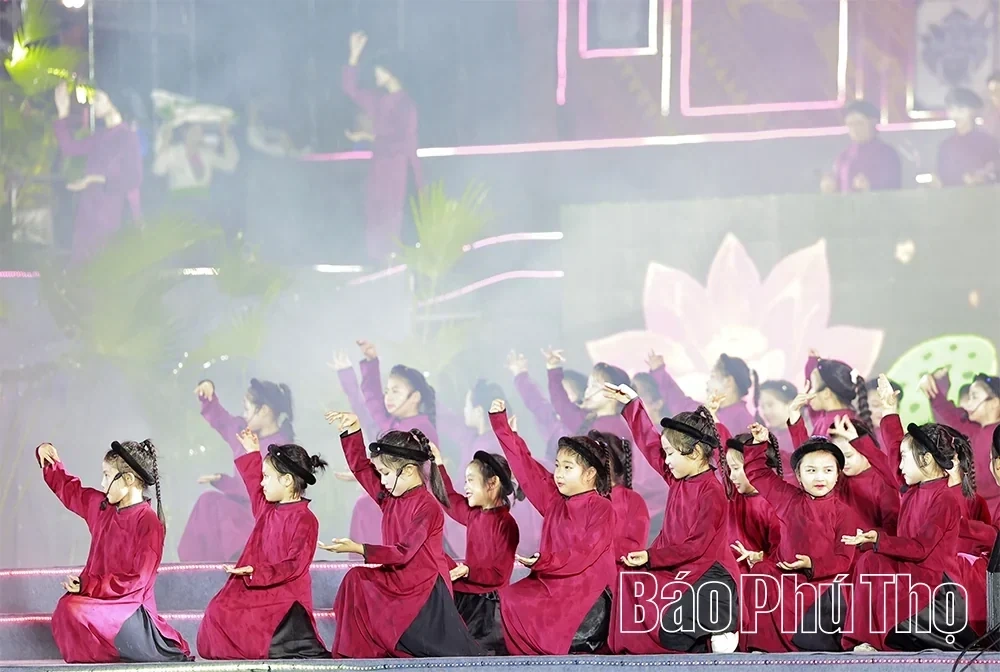
Xoan Singing melodies confidently performed by the younger generation on major stages.
Standing before the ancient courtyard of Hung Lo Communal House, Ms. Tang Quynh Nga (a tourist from Hanoi) shared: “Returning to Hung Temple and joining the heritage experiential tourism tour, I am truly moved. Listening directly for the first time to artisans and young children perform ancient Xoan melodies right on their native soil, the soaring vocals and lively drumbeats made me clearly feel the enduring vitality of national culture. This is the most unforgettable experience of my family’s trip.”
Sharing the same sentiment regarding the cultural depth of the Ancestral Land region, Mr. Tran Minh Duc, a tourist from Ho Chi Minh City, noted: “I am deeply impressed by the richness of heritage here. From architecture and spiritual spaces to folk knowledge and traditional craft villages, everything carries an extraordinarily valuable original breath. Seeing how local residents cherish and proudly introduce every custom and specialty dish, I see that heritage does not sit still inside books, but truly lives vibrantly in daily life.”
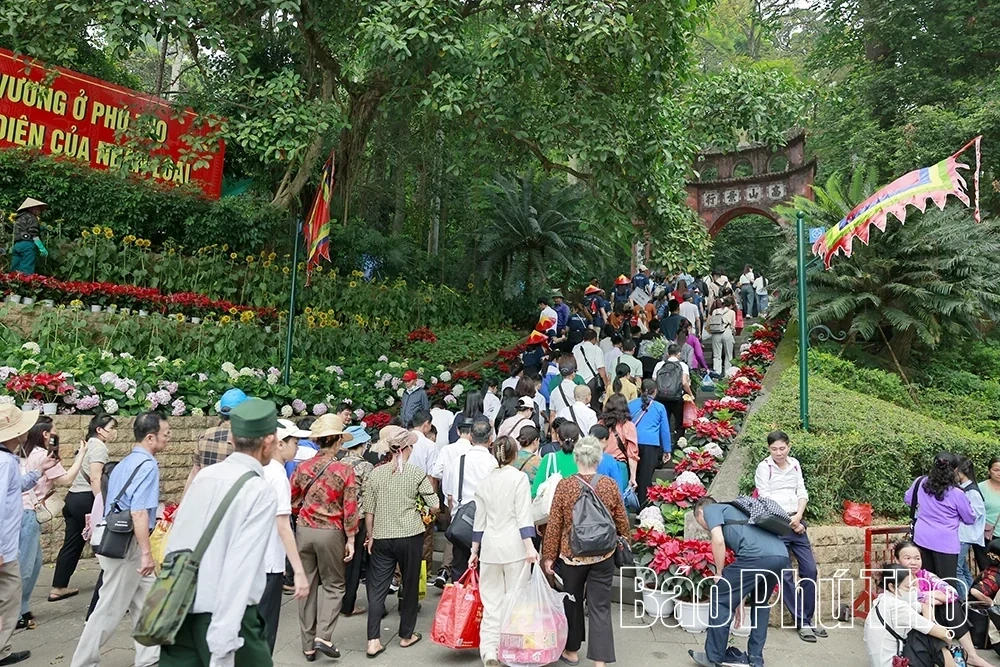
Large numbers of citizens and tourists visiting Hung Temple.
Alongside achieved results, the process of exploiting heritage to serve tourism also poses considerable challenges. Large crowd gatherings, combined with impacts from commercial activities, can place several heritages at risk of distortion, over-theatricalization, or excessive commercialization. A typical example is the Tro Tram Festival with its sacred Mat (Secret) ritual held at midnight. The moment of “touching the two sacred objects,” which inherently takes place in the quiet, solemn atmosphere of a rural village, is sometimes affected by tourists jostling, filming, and taking photographs. Without appropriate management, the boundary between promoting and upholding heritage values versus the risk of fading original cultural traits becomes exceedingly difficult to control.
Facing practical demands, preserving and promoting heritage needs to be identified as an overarching task in tourism development. Heritage cannot merely be kept inside museums; it must continue existing within community life, being practiced, handed down, and spread. However, exploitation must rest upon the principle of respecting original values, cultural diversity, and community practice spaces—not chasing short-term economic gains at the expense of distorting heritage.
For the cultural lifeblood of the Ancestral Land to continue being safeguarded and spread, it is necessary to promote the central role of local communities and artisans—those who directly hold, practice, and pass down heritage. Local authorities need to focus on perfecting support mechanisms and policies, investing in infrastructure, and creating conditions for citizens to participate in tourism development linked with cultural preservation. Concurrently, step up community-based tourism models, enact suitable remuneration policies so artisans have peace of mind to teach, and awaken pride and responsibility for safeguarding heritage among the younger generation.
When the community truly becomes the subject of preservation—participating in exploitation and enjoying benefits from heritage—traditional cultural values will gain further conditions to continue in contemporary life, becoming an endogenous breakthrough force driving the homeland of Phu Tho to grow increasingly prosperous and happy.
Le Hoang

baophutho.vn From November 13 to 16, the 1st Global Craft Village Preservation and Development Festival in 2026 took place in Hanoi, gathering...

baophutho.vn On November 14, Trung Son Commune officially inaugurated a distinctive cultural and artistic program themed "Cultural Colors, the 2026 Trung...

baophutho.vn The unique traditional costumes of the Dao Quan Chet people

baophutho.vn Di Nau - Historical testaments that have stood the test of time

baophutho.vn Tap Luc communal house

baophutho.vn Phu Tho Culture Express: Elevating Tam Dao tourism

baophutho.vn Phu Tho Culture Express: Lac Village - Traditional values draw visitors

baophutho.vn Muong Dong is one of the four major Muong regions in the Hoa Binh area, where distinctive traditional cultural values gathered by generations...

baophutho.vn According to the People's Committee of Trung Son commune, the "Cultural Colors and Highland Love Market of Trung Son in 2026" program will take...

baophutho.vn Exploring Tay Coc - The homeland of legendary ancient wells
Editor-in-chief: Vi Manh Hung
License No.154/GP-BTTTT dated March 3,2022 by the Ministry of Information and Communications.
Address : No.Nguyen Tat Thanh street, Viet Tri ward, Phu Tho province
Tel: (0210) 3846.508; (0210) 3855.303
Email: info@baophutho.vn
Website: baophutho.vn
Copyrights Phu Tho Newspaper; All rights reserved
