
{title}
{publish}
{head}

Located in Giap Lai Commune, this ancient communal house is revered by local residents as the “soul of the Muong village.” It is dedicated to Duc Thanh Tan Vien – one of the Four Immortals in Vietnamese folk belief.

Chung Communal House is a structure more than one hundred years old.
Inside the sanctuary, the altar also bears the ancestral tablet of His mother, Mrs. Dinh Thi Den, along with the deities Quy Minh, Cao Son, and the pioneering forebears who founded Giap Lai village in earlier times. Every horizontal lacquered board and parallel sentence hanging within the house still seems to echo the Muong people’s enduring spirit of gratitude toward their roots.
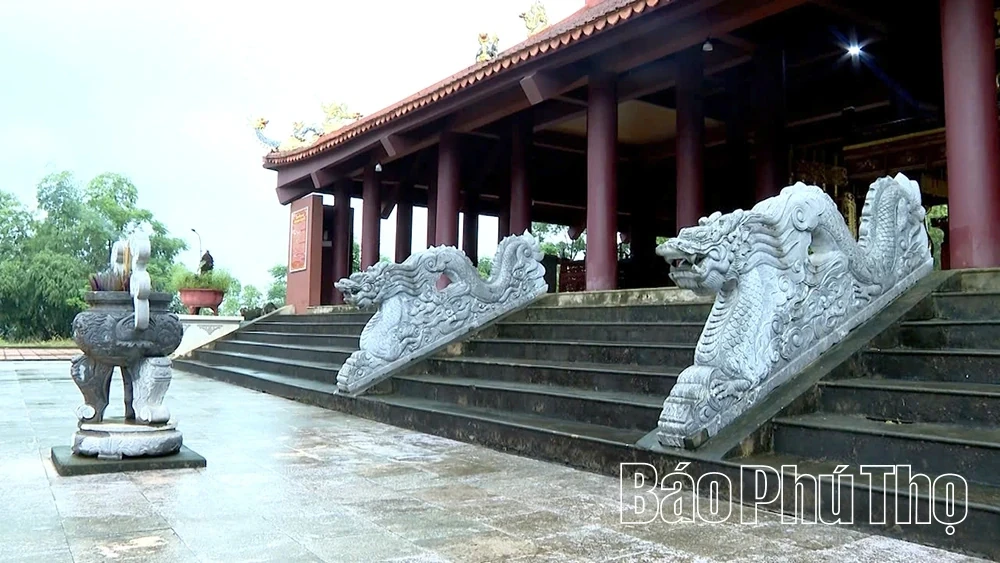

In 2010, Chung Communal House underwent restoration and reconstruction.
According to Nguyen Van Thong, the caretaker of the communal house, Chung was built in the early nineteenth century and was once the largest communal house in the region. It was constructed from precious timber and roofed with palm leaves — a material closely associated with Muong daily life. After the war, the structure was severely damaged, leaving behind only a few remnants. In 2010, thanks to contributions from the local community, the communal house was rebuilt on its original foundation. Today, it serves not only as a place of worship but also as a spiritual anchor for the entire community.
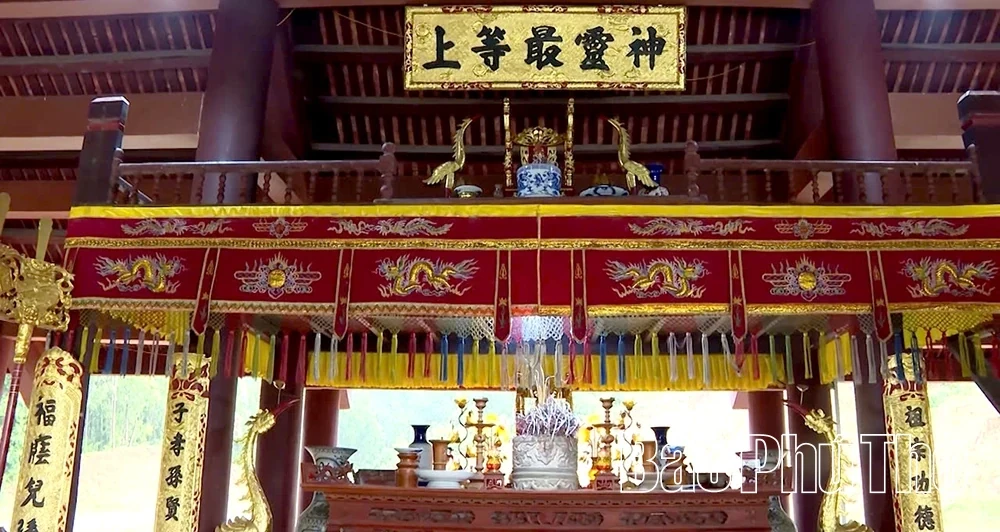
Passing through the three-entrance gate, visitors can immediately feel the rustic yet refined beauty of the ancient architectural complex. The communal house follows the traditional “Nhat” layout, featuring five main compartments and two side extensions, all with open ventilation. Its roof, covered in dark mossy tiles, curves upward at the ends with dragon motifs facing the moon. The floor is paved with red-fired Bat bricks, infused with the faint scents of incense and aged wood.
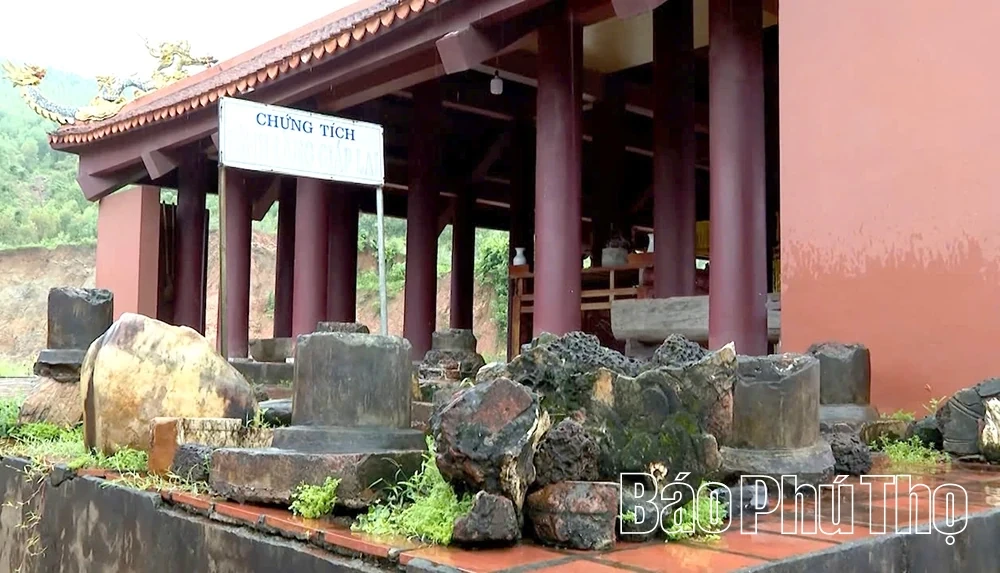
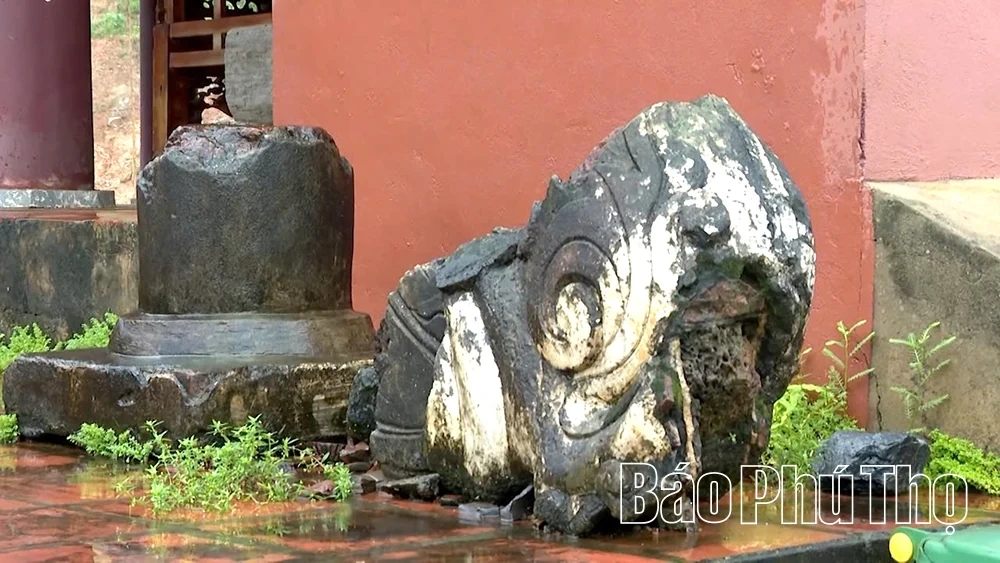
Artifacts preserved from the original structure — such as patterned tiles, decorative bricks, laterite stones, and old wooden pillars — are carefully displayed in a side chamber, like small fragments reconstructing the history of a century-old communal house.

The Chung Communal House Festival is typically held on the 14th and 15th days of the second lunar month. These are the most significant ceremonial days of the year, featuring a solemn worship ritual and a vibrant festival with traditional folk games such as tug-of-war, crossbow shooting, and duck chasing. In the days leading up to the festival, villagers clean the communal house grounds, prepare ceremonial offerings, and rehearse traditional rites. According to Dinh Ngoc Loi, the selection and training of ritual officers, gong ensembles, and “sinh tien” dancers begin as early as the start of the lunar year to ensure that all ceremonies are conducted with dignity and precision.
Trọng Khánh, Đỗ Tùng

baophutho.vn Bound directly to the geographic cradle of Muong anthropology, straw wine (ruou can or raw toong in the indigenous tongue)—a fragrant, deeply...

baophutho.vn Phu Tho Culture Express - Lingering echoes of Muong folk singings

baophutho.vn Amidst the rapid transformations of contemporary life, diligent hands within Ren Hamlet, Dan Chu Commune, continue to safeguard the century-old...

baophutho.vn Amidst the rapid transformations of contemporary life, ancient Xoan vocal melodies continue to resonate across the Ancestral Land, seamlessly...

baophutho.vn On the morning of June 20, 2026, Vinh Thanh Commune hosted a high-protocol ceremony to formally receive the Provincial-Level Historical and...

baophutho.vn Situated within Thong Nhat Ward, the Muong Cultural Heritage Museum has long been celebrated as a miniature Muong village—a sacred sanctuary...

baophutho.vn The beauty Thai traditional costume

baophutho.vn As the sacred ancestral cradle of the Vietnamese nation, Phu Tho has long been celebrated as the custodian of an extraordinary living treasury...

baophutho.vn Phu Da stone temple - A masterpiece of stone architecture

baophutho.vn The People’s Committee of Thanh Ba Commune has officially hosted a high-profile ceremony to announce the establishment and launch of the Hanh...
Editor-in-chief: Vi Manh Hung
License No.154/GP-BTTTT dated March 3,2022 by the Ministry of Information and Communications.
Address : No.Nguyen Tat Thanh street, Viet Tri ward, Phu Tho province
Tel: (0210) 3846.508; (0210) 3855.303
Email: info@baophutho.vn
Website: baophutho.vn
Copyrights Phu Tho Newspaper; All rights reserved
