
{title}
{publish}
{head}

Leveraging its rich cultural heritage and diverse natural landscapes following the merger, Phu Tho is gradually shifting from an approach based on individual destination management toward creating and operating tourism as an integrated ecosystem. With the government playing an enabling role, businesses serving as the core driving force, and local residents actively participating in tourism through digital platforms, the tourism value chain of the Land of the Hung Kings is gradually taking shape in a more integrated and sustainable manner.
The merger of Phu Tho, Vinh Phuc and Hoa Binh has opened up a vast tourism space encompassing a wide range of complementary tourism products. These include the Worship of Hung Kings belief, Phu Tho Xoan Singing, the Tay Thien and Tam Dao scenic areas, Dai Lai Lake, Thanh Thuy hot mineral springs, Hoa Binh Lake, Xuan Son National Park, and the cultural spaces of the Muong, Dao, Thai and Mong ethnic groups.
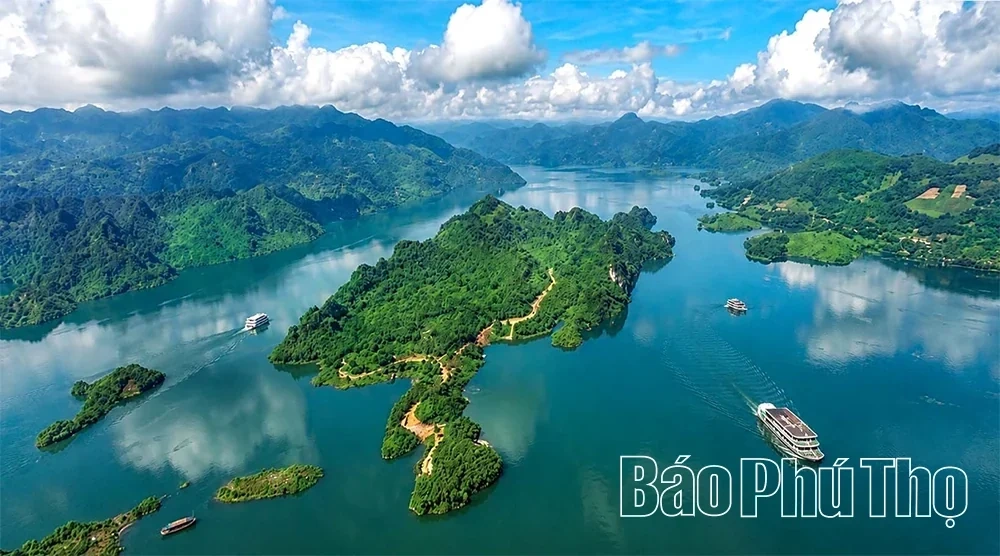
Hoa Binh Lake is an ideal destination for those who love majestic natural landscapes and tranquility.
Previously, tourism destinations were mainly developed separately within their respective localities. Today, conditions for inter-regional linkages have become clearer. A journey can begin at the Hung Kings Temple with an experience of the nation’s roots and cultural heritage, continue with a wellness stay in Thanh Thuy or Tam Dao, and then explore the landscapes and community culture around Hoa Binh Lake. Rather than competing for visitors’ time and spending, these products can complement one another. This provides a foundation for the province to shift from a “destination management” mindset toward organizing tourism routes, product chains and visitor markets.
Since the beginning of the year, Phu Tho has welcomed more than 10.5 million visitors, generating tourism revenue of over VND10.755 trillion. During the Hung Kings Commemoration – Hung Kings Temple Festival and the 2026 Land of the Hung Kings Culture and Tourism Week alone, visitor numbers reached approximately 6.5 million, demonstrating the strong appeal of Phu Tho tourism.
The tourism product structure is also changing. A number of tours and routes, such as the interconnected “One Destination – Three Experiences” journey and the “Three-in-One” model, along with craft village, culinary and folk cultural performance experiences, have been incorporated into tourism programs, helping encourage visitors to stay longer.
On July 15, 2026, the provincial People’s Committee issued Decision No. 2229 approving the Phu Tho Tourism Development Plan for 2026–2030. By 2030, the province aims to welcome at least 20 million visitors, including approximately 7.8 million overnight visitors, with tourism revenue reaching VND26.5 trillion.
The notable point is not simply the growth targets themselves, but the new development approach behind them: building a comprehensive tourism ecosystem in terms of scale, types, products and services, with high quality and competitiveness.
To achieve these objectives, the province has identified eight groups of solutions, including improving mechanisms and policies; developing infrastructure; strengthening human resources, businesses and local communities; developing tourism products; promoting digital transformation; intensifying tourism promotion and marketing; and strengthening linkages and cooperation.
According to Duong Hoang Huong, Director of the Department of Culture, Sports and Tourism, following the merger, Phu Tho has gained new development space and tourism has been identified as a comprehensive economic sector. The province is focusing on linking cultural heritage preservation with the sustainable exploitation of natural resources, with the aim of shifting from seasonal sightseeing tourism toward year-round experiential and resort tourism.
Under this orientation, the roles of stakeholders in the tourism ecosystem are becoming clearer: the government creates an enabling environment, businesses serve as the core, and local residents are the main actors in community-based tourism.
The province is focusing on spatial planning, administrative reform and prioritizing resources for transport infrastructure connecting tourist areas and attractions, accommodation facilities, entertainment zones and cultural institutions. Businesses are making use of the expanded development space to invest in and design tourism products combining culture, resorts, ecology and sports. Local residents, particularly those in mountainous areas, are applying digital technology and providing community-based tourism services ranging from homestays, cuisine and cultural experiences to transportation, while incorporating OCOP products and traditional craft villages into the tourism value chain.
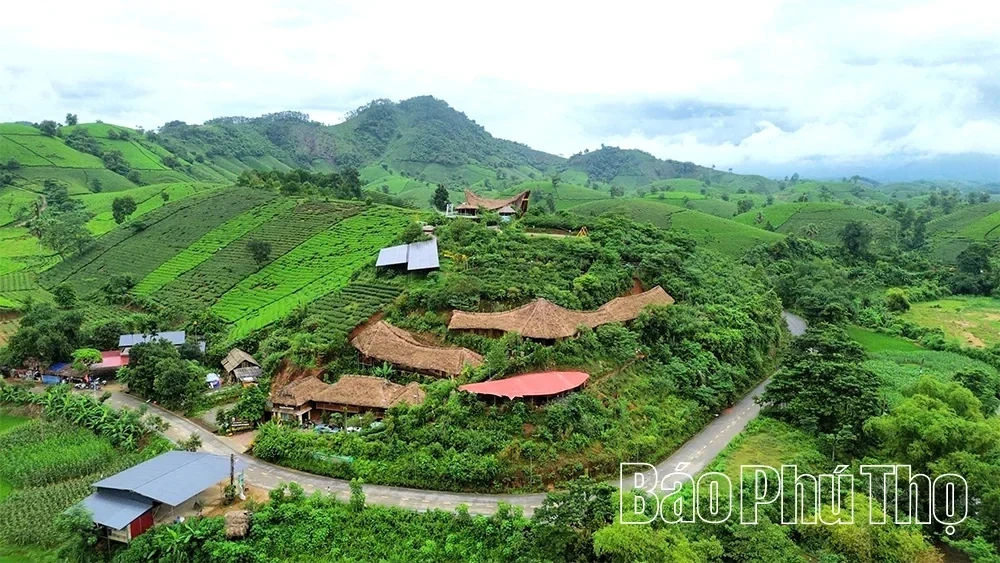
Long Coc Ecolodge homestay in Long Coc Commune has become a typical model attracting a large number of visitors in recent years.
At the end of June 2026, the Ministry of Culture, Sports and Tourism and the Phu Tho Provincial People’s Committee signed a cooperation program to promote digital transformation, develop digital data and deploy digital platforms serving smart tourism and the digital tourism economy for the 2026–2030 period. The program aims to build a smart tourism ecosystem based on digital data, ensuring connectivity, interoperability and data sharing, while developing digital human resources so that government agencies, businesses and communities can participate together.
Dang Tuan Hung, Head of the Tourism Management Division under the Department of Culture, Sports and Tourism, said the province is gradually standardizing and integrating tourism data, building digital data and knowledge repositories, and digitizing cultural resources, heritage sites, festivals, craft villages, scenic landscapes and tourist destinations. Artificial intelligence (AI) is also being studied for applications in analysis, forecasting, management and decision-making support.
When data are interconnected, visitors can search for destinations, choose itineraries, book accommodation, use services, make payments and access digital guides. Businesses gain more market information to develop products, while management agencies can monitor visitor flows, assess the carrying capacity of individual destinations and adjust operations accordingly.
In remote areas, technology also helps narrow the gap with major markets. In Van Son, Pa Co and Da Bac, for example, social media, digital maps and service-booking platforms have enabled some destinations to reach a larger number of visitors.
“When a homestay attracts more guests, it generates additional demand for food, transportation, tour guides, cultural performances and local products. Technology enables residents to sell their services more directly, while giving authorities more data to provide support, training and management. This is an approach that should be expanded, particularly for community-based tourism models,” affirmed Nguyen Ngoc Lan, Chairman of the Phu Tho Tourism Association.
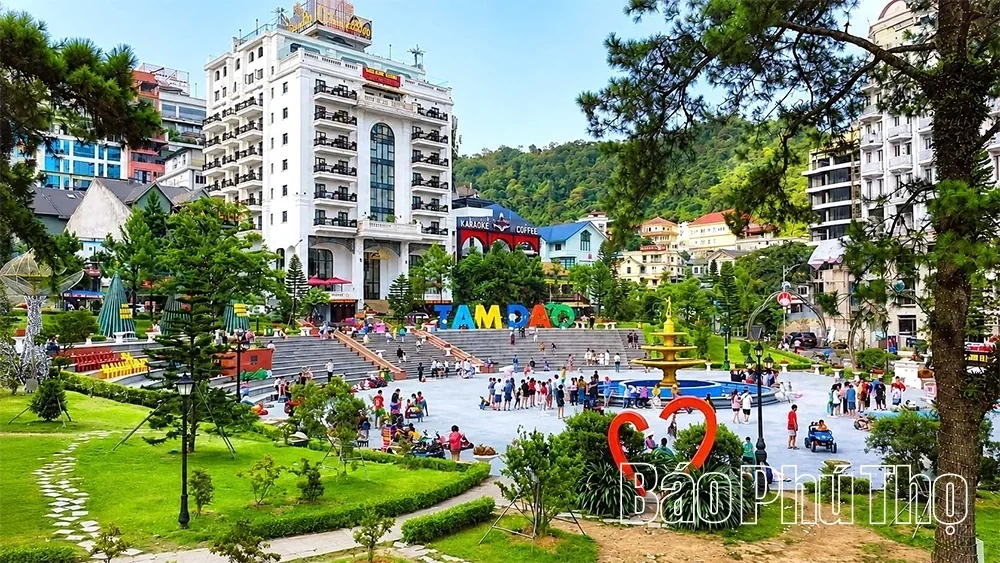
Tam Dao is an attractive destination thanks to its fresh and cool climate.
Alongside digital transformation comes the requirement for green development. Phu Tho aims that by 2030, 100% of tourist areas and attractions, accommodation establishments and tourism service businesses will no longer use single-use plastic products or non-biodegradable plastic bags.
The province is pursuing an approach that places culture as the foundation, heritage as a resource, creativity as a driving force and local residents at the center. Tourism development must go hand in hand with improving people’s livelihoods and preserving the cultural identity of the Land of the Hung Kings.
These components are being organized into a unified value chain. The target of welcoming 20 million visitors by 2030 will therefore not be measured solely by the number of people arriving in Phu Tho, but also by the number of days they stay, their spending and the share of value retained by businesses, residents and the locality.
This provides a foundation for the province to gradually move from simply exploiting individual destinations toward developing a multi-experience, smart, green and sustainable tourism ecosystem, with the ambition of becoming a national center for cultural and festival tourism.
Ngoc Tuan

baophutho.vn Mornings in Long Coc — the "Ha Long Bay on land" — as kitchen smoke still lingers over stilt house roofs, are the moments when locals prepare...

baophutho.vn On the afternoon of August 12, Mr. Vu Viet Van — Standing Committee Member of the Provincial Party Committee and Vice Chairman of the...

baophutho.vn Morning in Long Coc — the “Ha Long Bay on land” — as stove smoke still lingers over the stilt house roofs, is also when local residents prepare...

The legeacy of resistance literature and arts in the ancestral land

baophutho.vn Blessed with the picturesque Ho Ly Lake, sprawling cinnamon forests, and the rich cultural heritage of the Dao and Muong ethnic groups, Thuong...

baophutho.vn Behind every dish lies a story of the land and its people. From a rich, savory cup of midland green tea, Thanh Son sour pork, and traditional...

baophutho.vn Often likened to a "Ha Long Bay on the mountains," Hoa Binh Lake possesses immense potential to become a key national tourism area. By blending...

baophutho.vn Nestled on Ngoc Phac Mountain along the right bank of the Red River, Phuc Thanh Pagoda (Village 2, Tam Nong Commune) has long been a familiar...

Fish cooked with wild sour bamboo shoots – Authentic flavors, rich in tradition

baophutho.vn Amidst the endless waves of the Hoa Binh Reservoir, the Da Bia community-based tourism village (Duc Phong hamlet, Tien Phong commune) emerges...
Editor-in-chief: Vi Manh Hung
License No.154/GP-BTTTT dated March 3,2022 by the Ministry of Information and Communications.
Address : No.Nguyen Tat Thanh street, Viet Tri ward, Phu Tho province
Tel: (0210) 3846.508; (0210) 3855.303
Email: info@baophutho.vn
Website: baophutho.vn
Copyrights Phu Tho Newspaper; All rights reserved
