
{title}
{publish}
{head}

The Ministry of Culture, Sports and Tourism has officially announced the updated List of National Intangible Cultural Heritages. Following the recent administrative merger, Phu Tho province is honored to have four more heritages newly inscribed. Among them, two originate from the former Hoa Binh province.
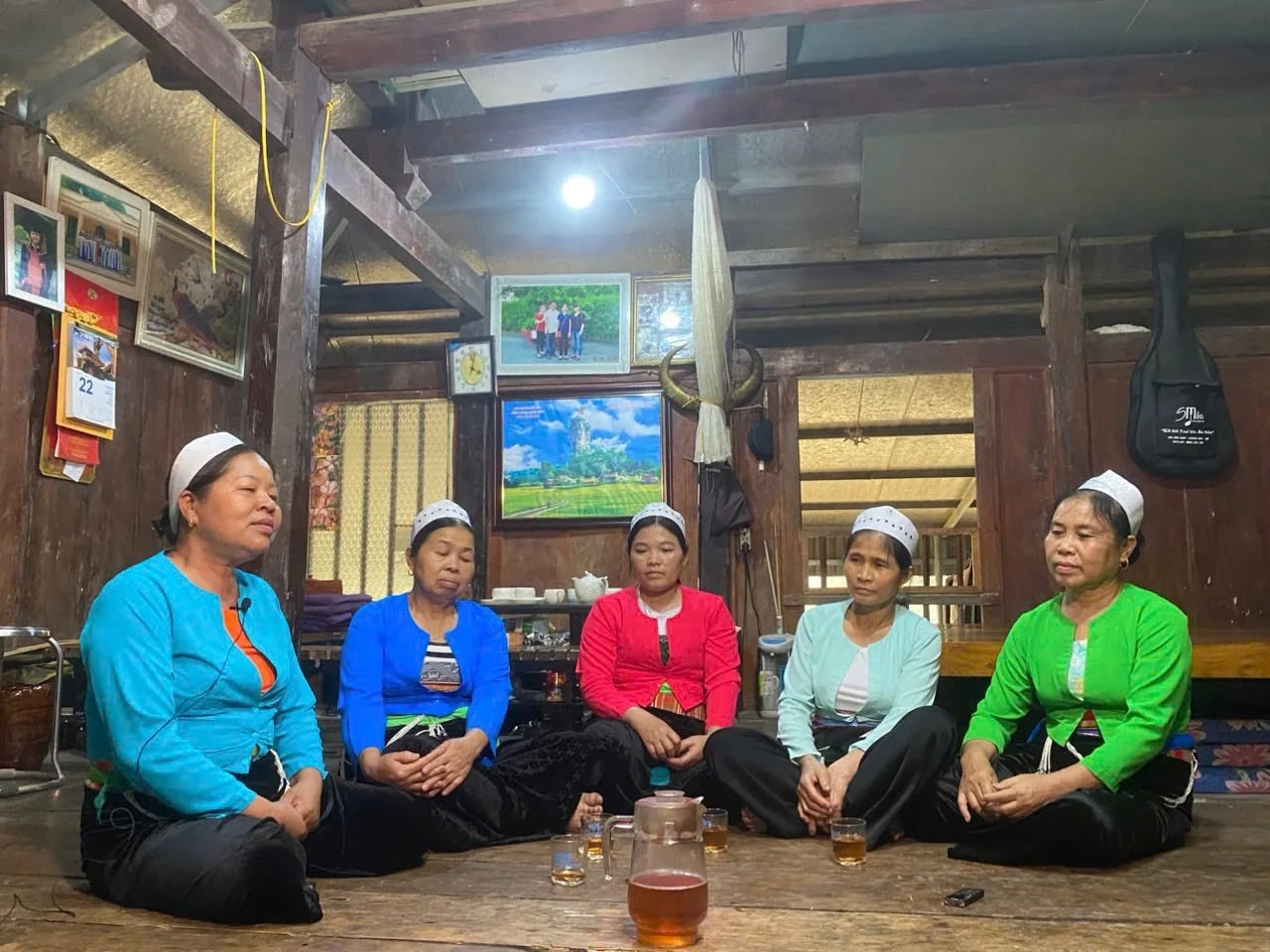
Artisans from Muong Bi commune, Phu Tho province exchange knowledge and perform the Bo meng melody in a traditional stilt house.
The two newly recognized heritages from the former Hoa Binh province include: the art of creating decorative patterns on the waistbands of Muong women’s skirts in Tan Lac, Lac Son, and Yen Thuy districts, categorized under folk knowledge and traditional craftsmanship. This traditional art represents a rich and distinctive body of folk design and decoration, demonstrating refined aesthetic sensibility. The waistband decoration technique, a fundamental component of the Muong people’s traditional costumes, originated long ago and is closely intertwined with the history and cultural identity of the ethnic group.
The second heritage is Thuong Rang and Bo meng singing of the Muong ethnic group in the former Hoa Binh province, classified under folk performing arts. With deep historical roots, this genre constitutes a core part of the lyrical folk music repertoire created and preserved by the Muong community throughout their daily lives and production activities. It plays a vital role in their spiritual and cultural life, as well as in community customs and traditions.
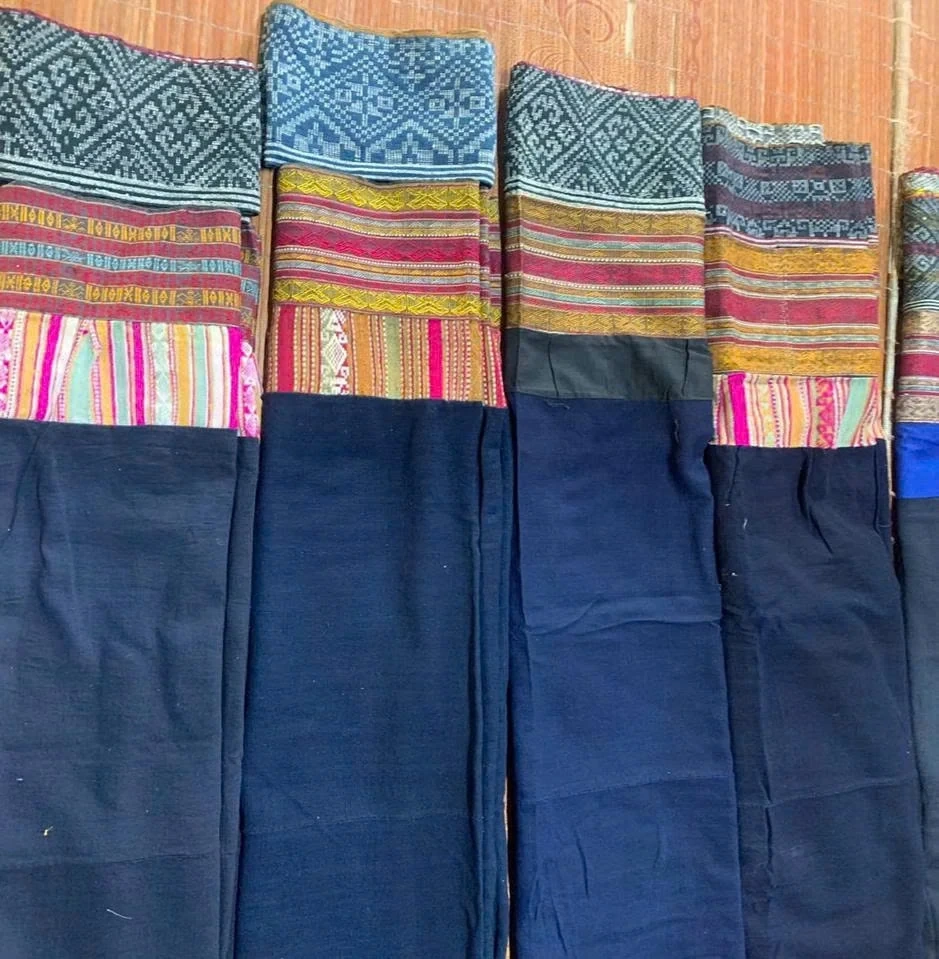
Decorative patterns on the waistband of a traditional Muong skirt.
From the former Phu Tho province, two more elements have also been added to the national list: the Cuop Ken Festival in Di Nau commune (now Tho Van commune), and the Doi Tet celebration of the Muong people in Thu Cuc commune. Thus, the newly merged Phu Tho province now has four more elements recognized as National Intangible Cultural Heritages. To date, the province is home to a total of 39 nationally recognized intangible cultural heritages.
The inscription of these heritages affirms their historical and cultural significance and highlights their role in the spiritual life of the local community. It also contributes to raising awareness and enhancing the responsibility of all levels, sectors, and people in preserving and promoting the enduring values of these cultural heritages.
Cam Le

baophutho.vn Through more than 1,000 years of formation and development, the Doi Tam drum-making village in Tien Sơn Commune, Duy Tien District, Ha Nam...

baophutho.vn Vibrant sounds of the Thai villages in Mai Chau

baophutho.vn With ethnic Muong people accounting for nearly 99% of its population, Muong Hoa Commune still preserves intact its traditional cultural...

baophutho.vn Binh Son Tower

baophutho.vn Phu Tho Cultural Express – The Dao quan chet people preserve the “soul and essense” of their ethnic culture

baophutho.vn Leveraging their long-standing traditional carpentry craft, residents of Tan Thanh Hamlet in Thanh Son Commune have effectively tapped into...

baophutho.vn With a strategic cultural vision, from the very early days of national independence, President Ho Chi Minh signed Decree No. 65/SL on November...

baophutho.vn On May 19, a ceremony was held at the President Ho Chi Minh Commemorative Relic Site in Hamlet 4, Yen Kien, Chan Mong Commune, to offer incense...

baophutho.vn Potential for tourism development in Hoa Binh hydropower reservoir region

baophutho.vn Amidst the bustling rhythm of a Newly Rural commune, Thanh Son steadily preserves its thousand-year-old cultural values. Curved roofs of...
Editor-in-chief: Vi Manh Hung
License No.154/GP-BTTTT dated March 3,2022 by the Ministry of Information and Communications.
Address : No.Nguyen Tat Thanh street, Viet Tri ward, Phu Tho province
Tel: (0210) 3846.508; (0210) 3855.303
Email: info@baophutho.vn
Website: baophutho.vn
Copyrights Phu Tho Newspaper; All rights reserved
