

{title}
{publish}
{head}

As night falls, the silence becomes absolute. Only then can one hear the rhythmic clack-clack of the shuttles. This is Muong Be (comprising Be Tren, Be Duoi, and Be Ngoai hamlets in Quyet Thang Commune)—a peaceful land where life slows down during the season of weaving and embroidery. It is a rare tranquility, a feeling almost lost in the frantic pace of modern life.
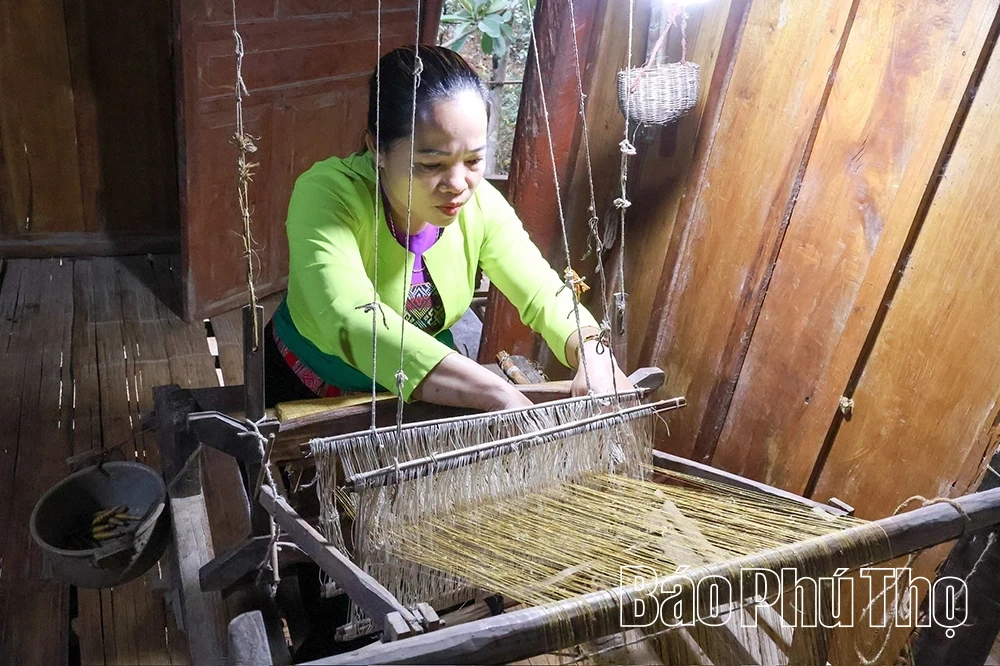
In Muong Be, traditional brocade weaving is still preserved beneath the roofs of ancient stilt houses.
After several missed appointments, we finally returned to Muong Be to “live slowly” among the ancient stories of this historic land. Beside the warm hearth of a stilt house, we listened to mothers and grandmothers recount tales of growing cotton, raising silkworms, and spinning silk to create vibrant lap cap (skirt waistbands) and cozy blankets.
To a non-Muong visitor, there is a constant sense of wonder in the creaking of looms made from seasoned chinaberry wood—looms passed down through generations, now polished by the patina of time. The steady beat of the shuttle feels like the ticking of a clock, measuring the gentle flow of history.
Muong Be has changed since our last visit nearly a decade ago. The pungent scent of rotting straw is gone, replaced by paved roads that have smoothed over the old winding dirt paths. Yet, the heart of the village remains: the ancient stilt houses, the diligent hands of Muong women weaving colorful brocade, and the warm, communal way of life.
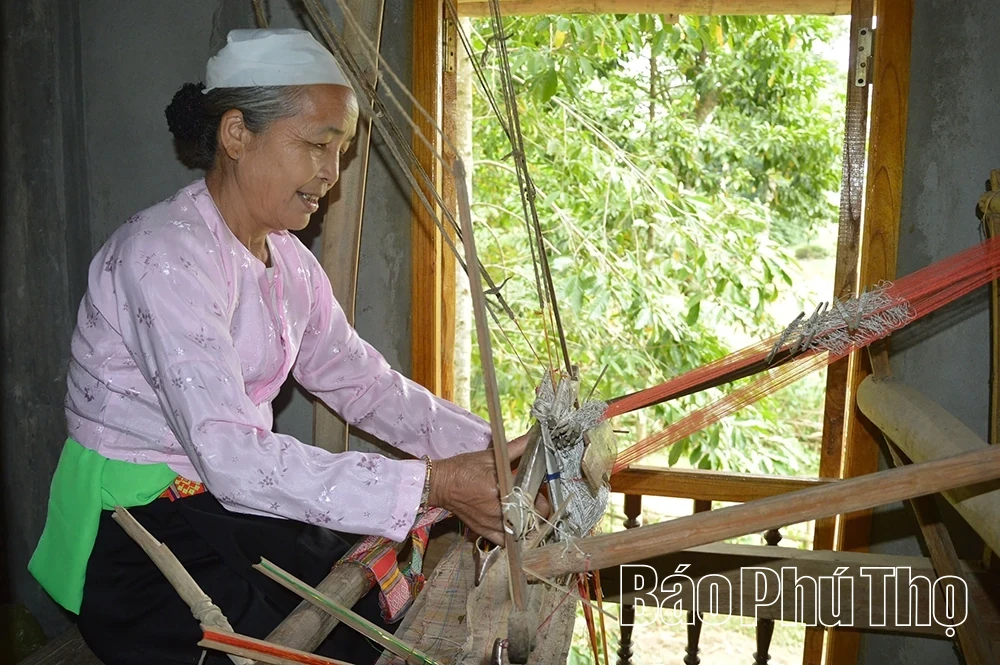
Once the harvest is over, Muong Be women return to their looms to weave vibrant squares of brocade.
Following Mr. Bui Thanh Son, Deputy Chief of the Office of the People’s Council and People’s Committee of Quyet Thang Commune, we wandered through the hamlets. Wooden and concrete stilt houses nestle under the lush green canopy of tall doi trees. At the home of Mrs. Bui Thi Son, we saw unfinished brocade on the loom, featuring stylized patterns of birds, dragons, peacocks, and diamonds.
According to the locals, weaving serves both practical and spiritual purposes. Young girls weave blankets and pillows for their dowries, while older women prepare exquisite fabrics to offer to their ancestors during the upcoming Tet holiday.
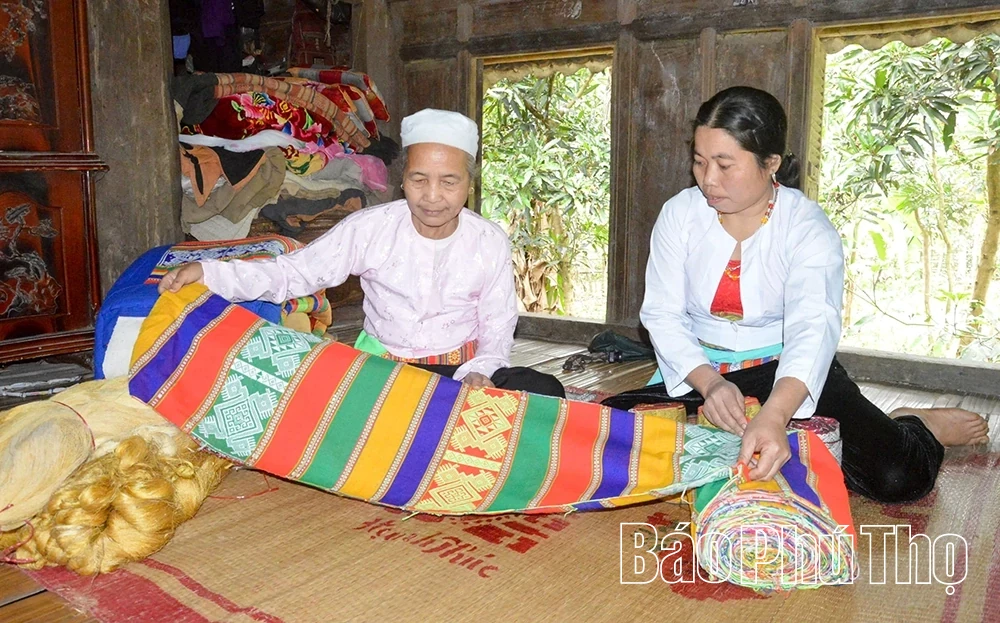
Each piece of brocade showcases the meticulous craftsmanship of Muong Be women.
Today, many households still keep their looms. While most women aged 40 to 45 are masters of the craft, the younger generation’s involvement varies. "No matter what, we must preserve this craft. It is the traditional beauty passed down by our ancestors," says 61-year-old Mrs. Bui Thi Im.
In Muong culture, weaving was once a prerequisite for marriage. Tradition dictated that before moving to her husband’s house, a girl had to hand-weave 10 to 12 blankets and mattresses as gifts for her in-laws, proving her skill and diligence. These fabrics are more than household items; they are central to the spiritual life of the Muong people.
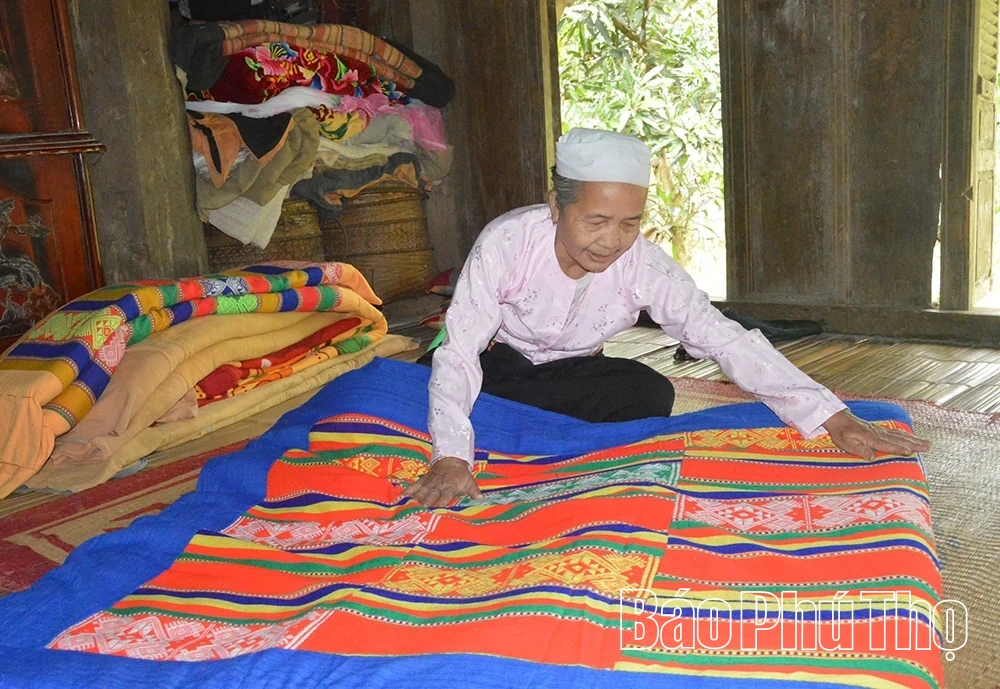
In Muong Be, every home is filled with hand-woven blankets and pillows.
Though industrial fabrics are now widely available, the people of Muong Be still cherish their “silk and loom” heritage. Mr. Bui Van Khoan, head of Be Tren hamlet, notes that many families refuse to part with their looms, seeing them as the soul of their community. From pillows adorned with vivid phoenix patterns to traditional costumes, everything is handmade, reflecting the brilliant colors of the mountains and forests.
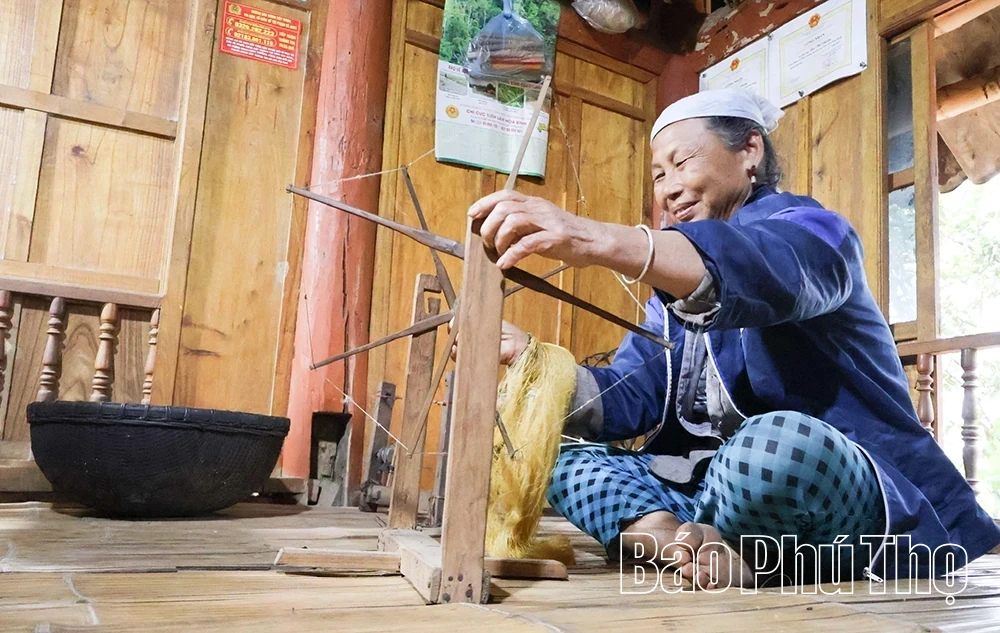
Mrs. Bui Thi Im talks about the traditional weaving techniques handed down through generations of women in her family since her youth.
The dexterity of Muong women is not only evident in their daily farm work but also in every stitch and pattern of their attire—bright and hopeful, much like their lives.
As night returns and silence reigns, the clack-clack of the shuttle continues to echo beneath the stilt houses.
The endurance of this craft in the face of a market economy is a testament to the resilient spirit of the Muong people. The greatest legacy they leave for their children is this cultural flame, shining brightly across the vast highlands.
We will surely return to Muong Be many times more, to hear the creak of the loom and the rhythm of the shuttle, and to once again wrap ourselves in the warmth of blankets woven with the love of a mother waiting for a child to return home.
Manh Hung

baophutho.vn On the evening of April 15, at Hung Vuong Square, Mr. Nguyen Huy Ngoc — Provincial Party Committee Member, Vice Chairman of the Provincial...

baophutho.vn Turning toward the nation’s roots, Phu Tho province is urgently finalizing preparations for a diverse series of cultural activities to...

baophutho.vn Characteristic musical instruments of ethnic groups

baophutho.vn On the evening of April 14, at Hung Vuong Square, the Organizing Committee of the 2026 Hung Kings' Commemoration held a preliminary rehearsal...

baophutho.vn In anticipation of the Hung Kings' Commemoration - Hung Temple Festival and the Ancestral Land Culture and Tourism Week 2026, localities across...

baophutho.vn Hat Gheo: The graceful soul of a homeland

baophutho.vn Sinh Ca: The cultural soul of the Cao Lan ethnic people

baophutho.vn Phu Tho Culture Express - Where the bird return

baophutho.vn The familiar folk verse, "No matter where you go / Remember the Ancestor's Anniversary on the tenth of the third lunar month," is more than...

baophutho.vn On April 8, Mr. Nguyen Huy Ngoc — Provincial Party Committee Member, Vice Chairman of the Provincial People's Committee, and Head of the...
Editor-in-chief: Vi Manh Hung
License No.154/GP-BTTTT dated March 3,2022 by the Ministry of Information and Communications.
Address : No.Nguyen Tat Thanh street, Viet Tri ward, Phu Tho province
Tel: (0210) 3846.508; (0210) 3855.303
Email: info@baophutho.vn
Website: baophutho.vn
Copyrights Phu Tho Newspaper; All rights reserved
