
{title}
{publish}
{head}

In several villages of ethnic minority and mountainous areas in the province, residents continue to preserve and develop the craft of making Do (poonah) paper. Far from merely preserving a distinctive cultural trait, this traditional handicraft has also been integrated into experiential tourism products, drawing large numbers of visitors.
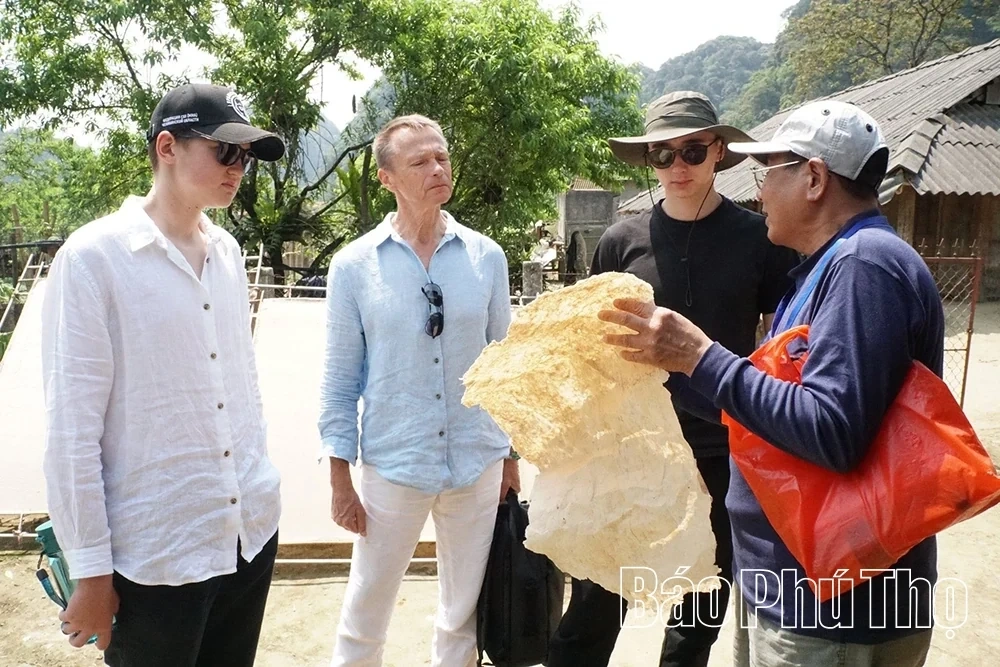
Foreign tourists learn about the manual Do paper making craft in an ethnic minority area of Phu Tho.
Preserving the Essence of a Traditional Craft
The Do paper making craft of the Mong people has existed since time immemorial and has been passed down through generations. According to Ms. Sung Y Do in Cha Day village, Pa Co commune, although it has not developed into a large-scale traditional craft village like other handicrafts, Do paper making quietly coexists with time, embodying unique spiritual and cultural values.
Every New Year, the Mong people traditionally cut Do paper into small pieces to paste on house pillars, corners, animal barns, and farm tools. They believe this is a ’sealing' ritual to conclude the old year, ward off evil spirits, and welcome a peaceful and lucky new year.
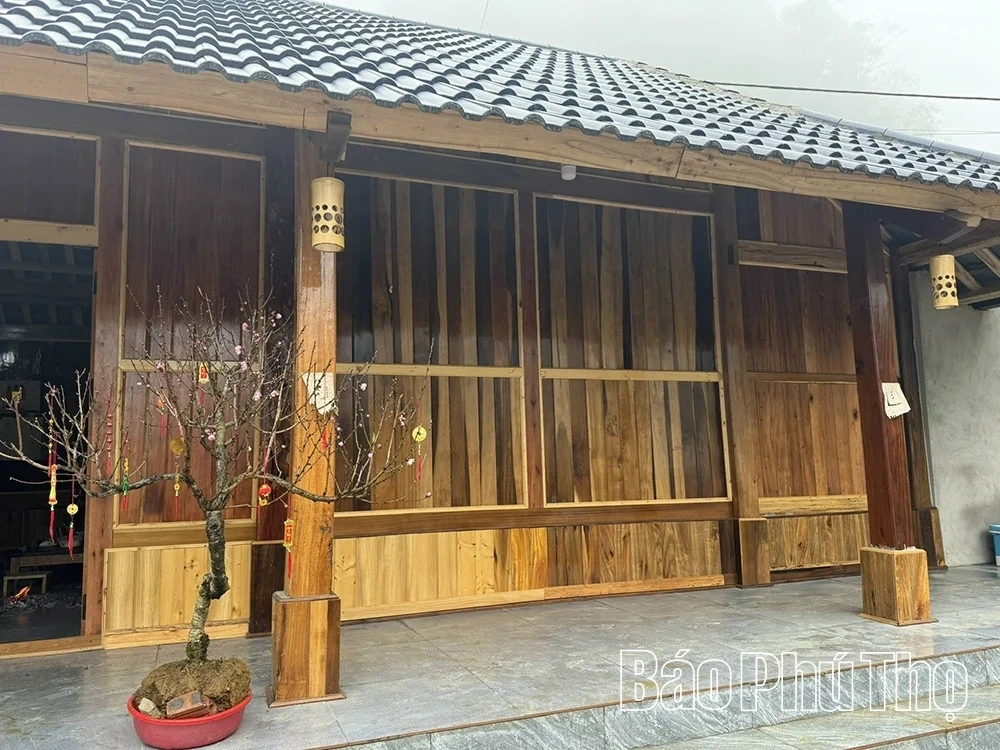
During the New Year, the Mong ethnic people in Pa Co commune perform an important ritual of pasting Do paper to ’seal' the old year and welcome a lucky new year.
To make Do paper, the Mong people of Pa Co use a type of small bamboo stems and the bark of paper mulberry trees gathered from the forest. The manual paper-making process is primarily undertaken by women and involves numerous steps. From harvesting raw materials to boiling pulp (stripping the white inner layer of the bark or stem, boiling it thoroughly with wood ash for hours until completely softened), the mixture is then soaked in water and pounded before being stirred vigorously in a water vat to extract the finest paper pulp. Finally, a thin fabric mold is used to scoop the pulp, distribute it evenly, and dry it under the sun until completely dry.
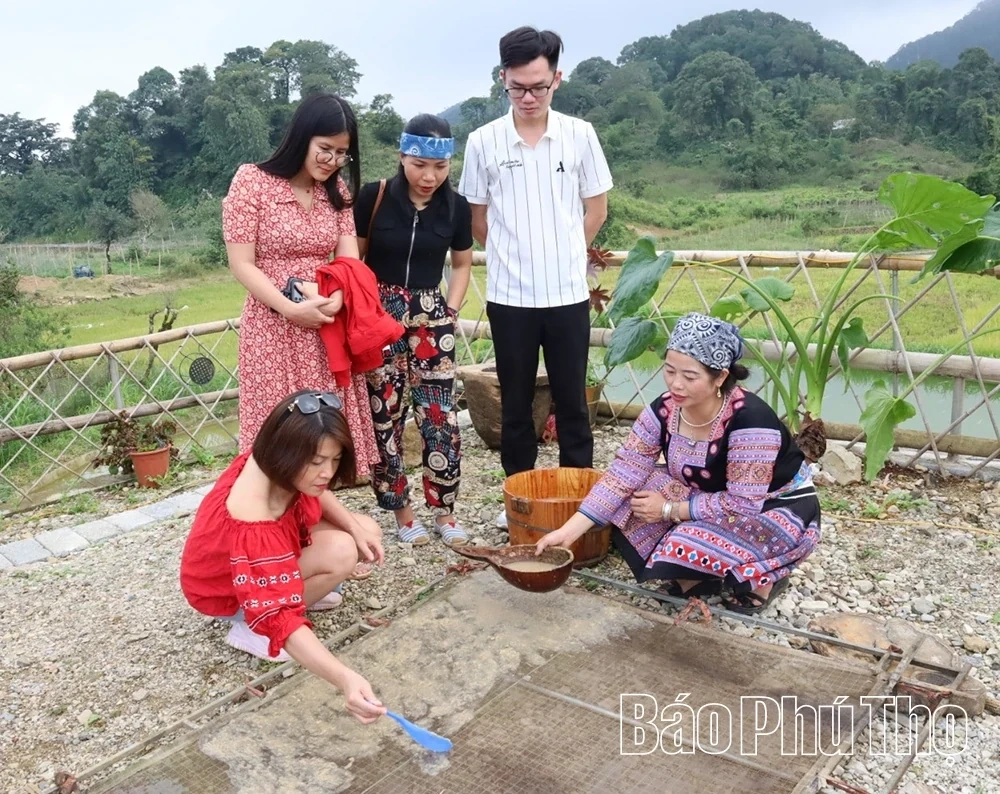
Tourists experience the step of spreading paper pulp evenly on a mold frame.
Within the Dao and Tay communities in Quy Duc and Duc Nhan communes, Do paper is commonly used for writing books, drawing paintings, and performing traditional rituals. Mr. Ly Hong Minh in Sung Bai village, Cao Son commune shared: Since ancient times, the Dao people have bound Do paper into books for writing. During major ceremonies like the initiation rite, praying for peace, or praying for bumper crops, Do paper is indispensable for painting and writing moral teachings that guide descendants to do good and avoid evil.
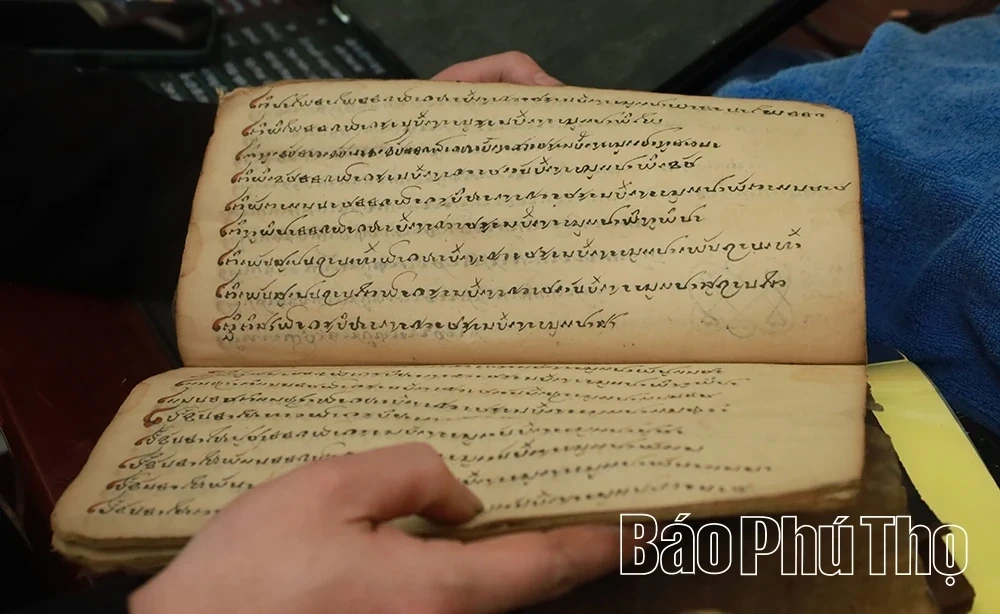
Thanks to the durable quality of Do paper, the Tay ethnic people in Duc Nhan commune have preserved ancient written folk knowledge over hundreds of years.
While the Mong in Pa Co use small bamboo stems and ’duong“bark to make paper, the Dao Tien people in Sung Bai village utilize the bark of the ’do” tree along with other natural materials. Through several manual stages, the finished Do paper is created with spongy, smooth, and resilient characteristics; when stretched, it produces a crisp sound, and it does not smudge when written or painted on. This is not only paper used in daily life or worship, but also the very material that forms artistic and spiritual ritual paintings of the Dao people.
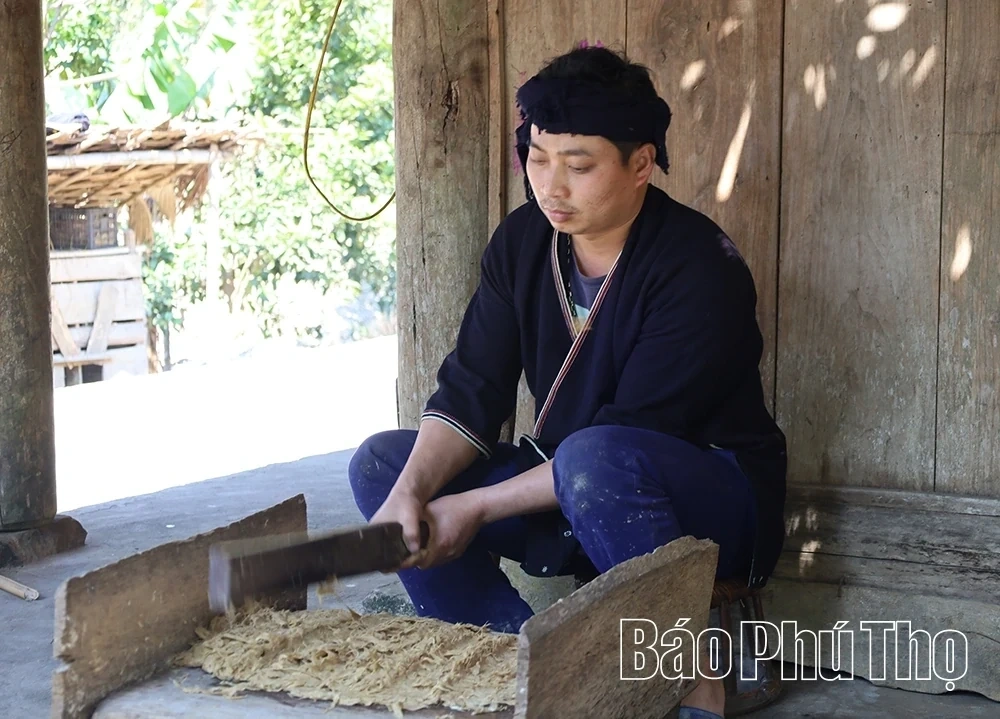
Villagers in Sung Bai, Cao Son commune restore the unique craft of Do paper making.
Currently, the manual craft of making Do paper is still maintained by ethnic minority communities. They believe that this is their ancestral craft and they bear the responsibility of passing it down to their children. Beyond its use in writing and painting, Do paper making has also gained preservation and development support through its potential application in design and interior decoration, such as notebooks, lanterns, fans, wall paintings, and origami...
An Attractive Experiential Tourism Product
Right in the villages where large numbers of ethnic minority people reside, experiential tourism activities centering around manual paper-making attract many curious tourists. Several destinations have designed and built tourism products, including family-hosted workshops (where participants are guided and make their own products). On their journey to discover this fascinating handicraft, tourists can experience the cultural space preserving the traditional craft and personally perform the steps, from grinding tree bark and stirring pulp to lifting paper and drying it...
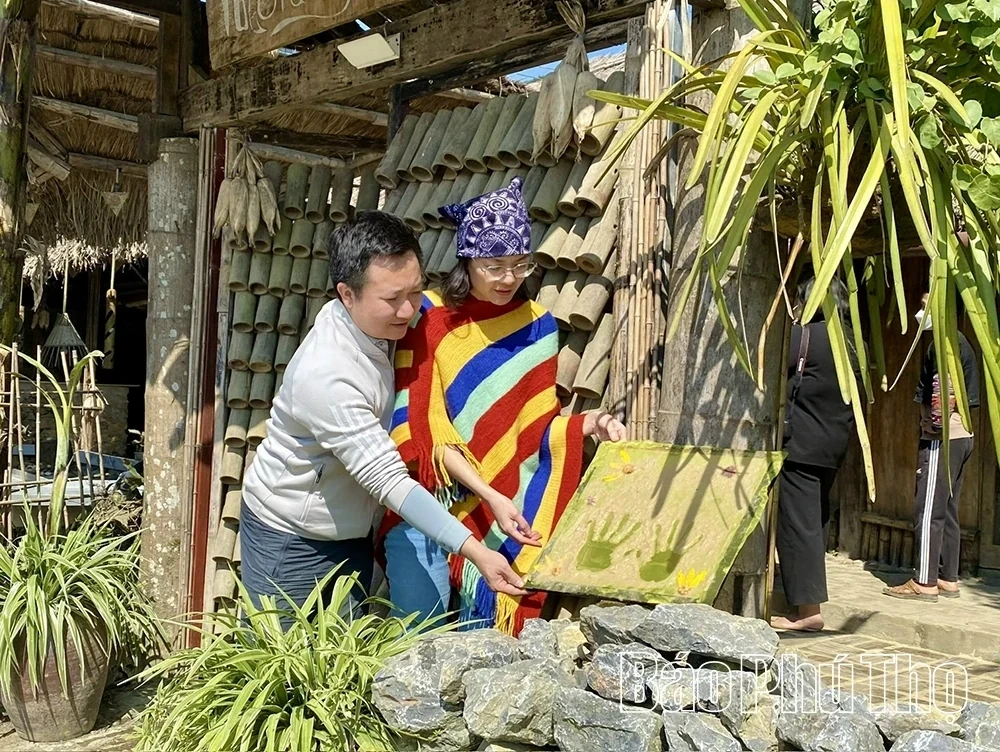
By shaping and completing paintings, tourists gain a deeper understanding of the culture and spiritual life of ethnic minorities.
Mr. Phang A Pao, a community homestay owner in Pa Co commune, said: One of the experiential products that captivates tourists is creating paintings on handmade Do paper. Through the process of cutting, shaping, and completing the paintings, tourists not only hear and learn about the meticulous paper-making stages but also understand more about the culture and spiritual life of the Mong people. “Touching” the Do paper also helps visitors retain information and forge an emotional connection.
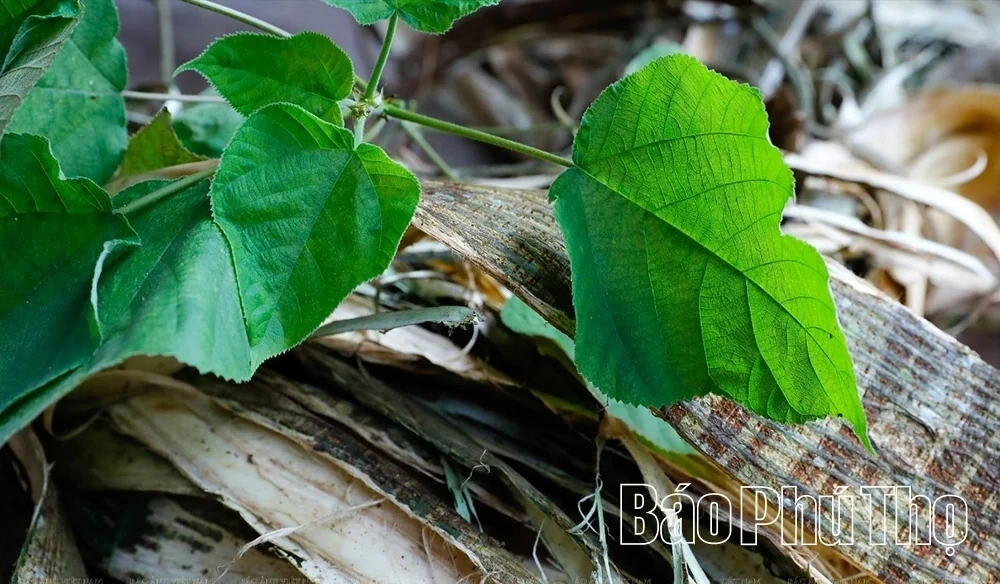
Various types of wild trees found in the forest serve as natural raw materials for making Do paper.
According to Ms. Ly Sao Mai, coordinator of the Da Bac Community-Based Tourism Joint Stock Company, tourists' engagement with Do paper is no longer limited to preservation but has shifted toward experience and creativity. At the Do paper production cooperative in Sung Bai village, Cao Son commune, tourists directly try their hand at paper lifting, block printing, and creating personalized items. Workshops have become an important bridge making the handicraft accessible, intuitive, and highly interactive. Many visitors are willing to spend hours making paintings, taking photos, filming videos, and sharing them on social networks. From a minor handicraft activity, this experience has become a natural marketing tool for local tourism.
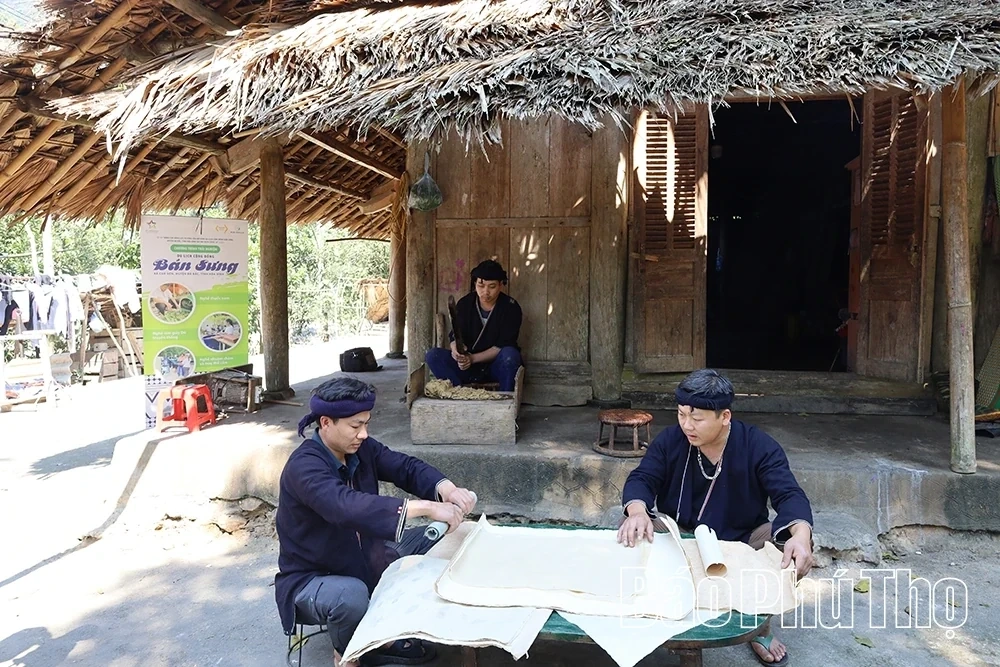
The Sung Bai village Do paper cooperative fully preserves the traditional manual paper-making process using natural Do bark.
Alongside other indigenous tourism products, the experiential model of making Do paper paintings is attracting tourists to these villages, bringing sustainable livelihoods while creating momentum to conserve and promote the unique cultural traits of ethnic minority groups.
Bui Minh

baophutho.vn Hung Kings Temple — the place of worship for the Hung Kings who founded the nation, the shared ancestors of the Vietnamese people — serves as a...

baophutho.vn Phu Tho Culture Express - Creating new livelihood opportunities from traditional crafts

baophutho.vn On the morning of September 18, a final dress rehearsal for the Ceremony Celebrating the 72nd Anniversary of Uncle Ho's Visit to Hung Temple...

baophutho.vn Phu Tho Culture Express - Preserving the soul of heritage promoting the value of histotical relics

baophutho.vn The craft of driftwood sculpting in Doan Ket hamlet, Luong Son commune is not merely a livelihood, but a journey of preserving the original...

baophutho.vn Tro Temple

baophutho.vn Phu Tho Culture Express - Traditional markets adapt to modern life

baophutho.vn Preserving Muong brocade

baophutho.vn Phu Tho Cultural Express - When architecture tells historical stories

baophutho.vn In the process of nation-building and defense, the Vietnamese people throughout history have always turned toward the Hung Kings — who not only...
Editor-in-chief: Vi Manh Hung
License No.154/GP-BTTTT dated March 3,2022 by the Ministry of Information and Communications.
Address : No.Nguyen Tat Thanh street, Viet Tri ward, Phu Tho province
Tel: (0210) 3846.508; (0210) 3855.303
Email: info@baophutho.vn
Website: baophutho.vn
Copyrights Phu Tho Newspaper; All rights reserved
