
{title}
{publish}
{head}

From natural ingredients gathered in the mountains, through skillful hands and age-old secrets passed down through generations, the Muong ethnic group of Hoa Binh has created a unique fermented drink stored in jars and enjoyed through long bamboo straws. Ruou Can (wine drunk through straws) is one of the three culinary treasures of the former Hoa Binh Province, now Phu Tho, recognized among Vietnam’s most distinctive food and beverage specialties.
The Muong ethnic group calls Ruou Can “Rạw toỏng.” This wine has been an integral part of community life since ancient times.
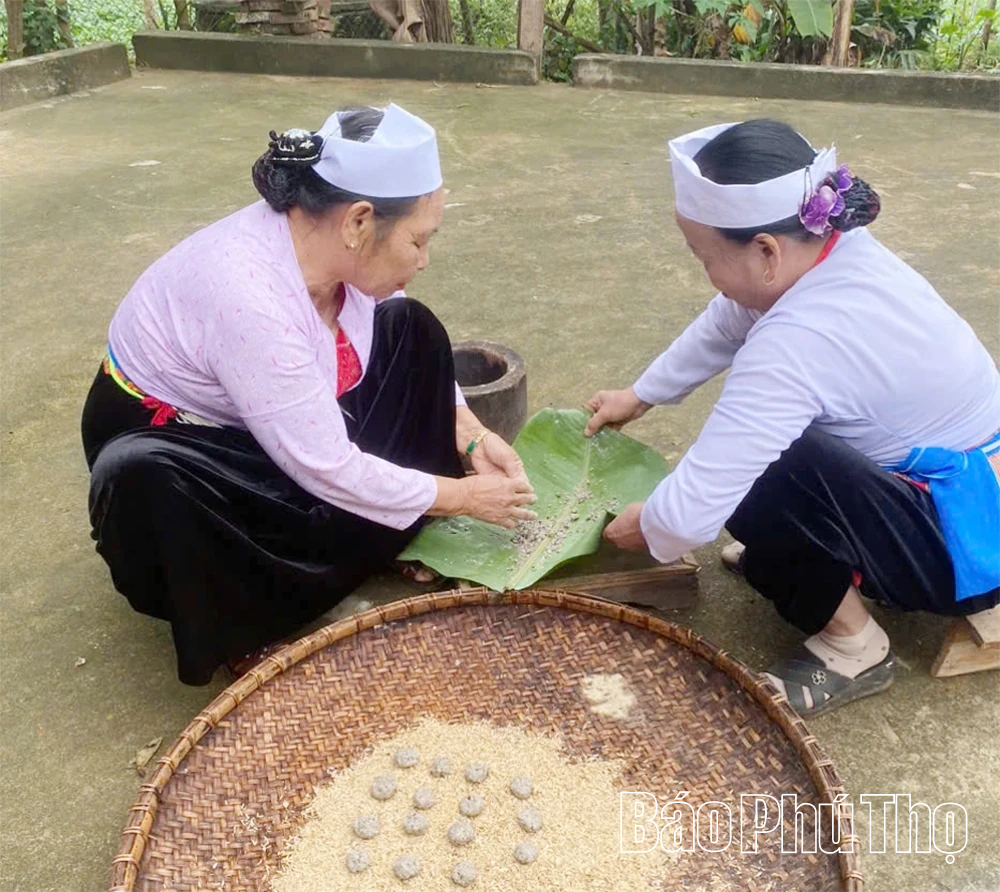
Muong people make wine yeast using traditional methods and natural ingredients.
According to tradition, the key to a good jar of wine lies in the yeast. The yeast is made from finely pounded Mun tree bark, galangal, ginger, a little chili, and guava leaves, squeezed for juice. These are mixed with sticky rice flour, shaped into small cakes, and stored in a straw bed on the kitchen loft for about three nights until a white mold appears. Afterwards, the yeast is dried above the hearth for around ten days, after which it is ready for use.
The main ingredient for ruou can is sticky rice. To make one jar sufficient for about six people, it requires two yeast cakes, 5 kilograms of sticky rice, 3 kilograms of rice husks, guava leaves, a 10-liter jar, and a steamer. The rice is soaked overnight until soft, and the husks are washed and sun-dried. Once all ingredients are ready, they are mixed and steamed. The cooked rice is then cooled, combined with yeast, and left to ferment overnight.
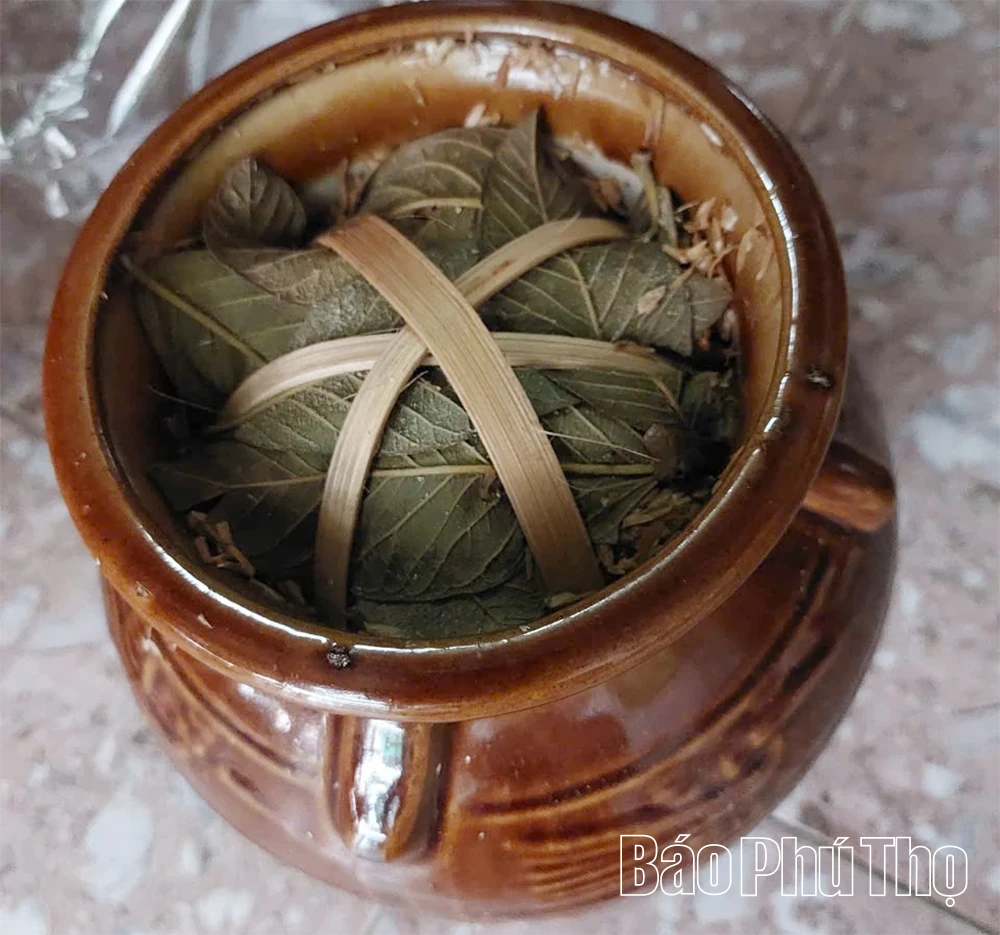
Finished wine jar.
The person mixing the yeast must be skillful, ensuring that the yeast penetrates evenly into each grain of rice and husk. Only then can the wine mature properly and last a long time.
When fermentation is complete, the mixture is sealed in an earthen jar. For the Muong ethnic group, the longer Ruou Can is aged, the better it tastes—it has no expiration date. Typically, the wine is best after three months of fermentation, though some families age it for as long as three years before drinking.
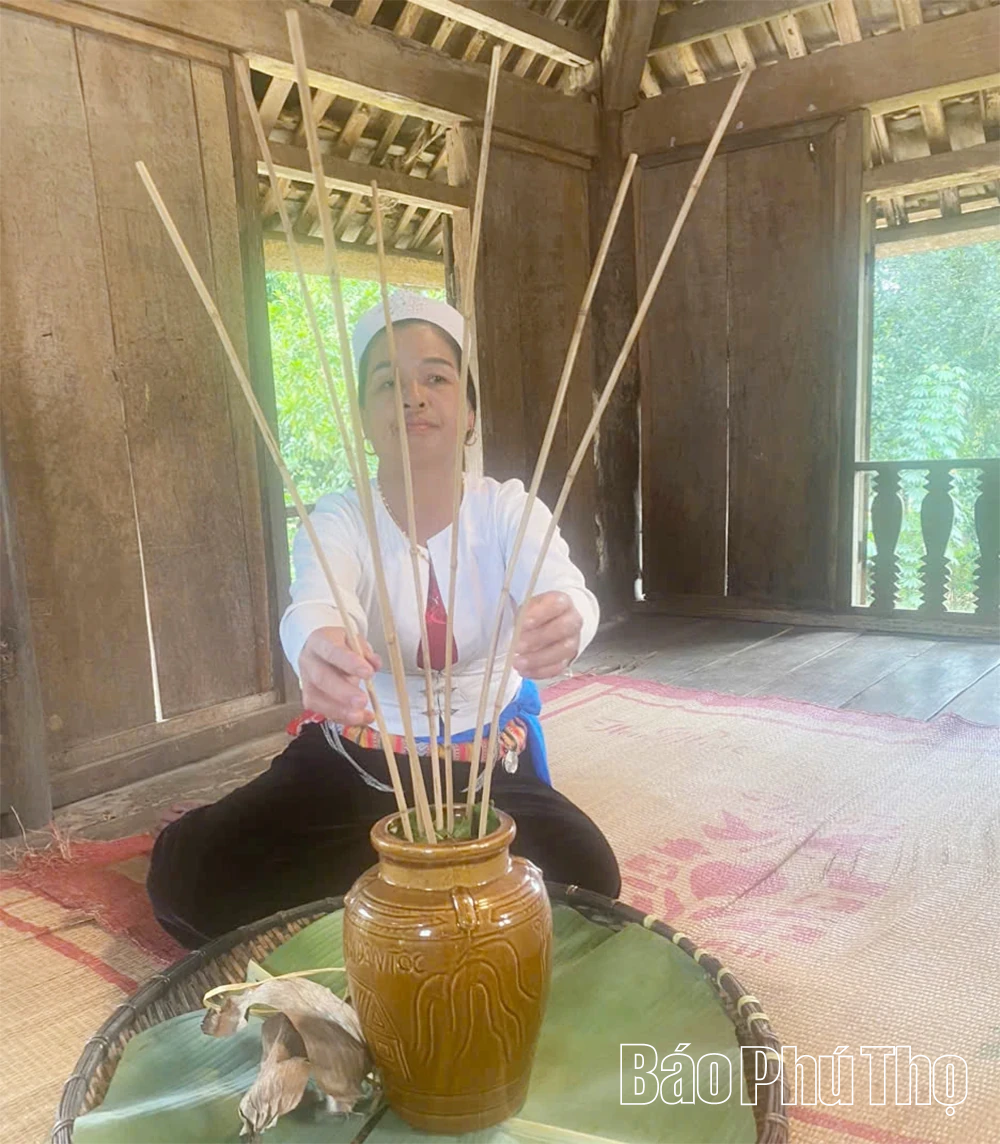
This special wine is not poured into cups. Instead, it is consumed using long straws made from bamboo or rattan, about one meter in length and slightly curved.
The straws are inserted directly into the jar, allowing drinkers to sip together. For the Muong ethnic group of Hoa Binh, Ruou Can is more than just a carefully crafted traditional beverage; it is a cultural hallmark. Behind every jar lies the story of the Muong homeland, of ancestral knowledge, and of the dexterity of Muong women. Beyond being a drink, Ruou Can embodies warm hospitality, heartfelt connection, and the rusticity of the Muong ethnic group.
Cam Le

baophutho.vn From the fire of blacksmithing to the soul of Mo Muong

baophutho.vn Tung Van pagoda - A sacred heritage of Tho Tang

baophutho.vn Phu Tho Cultural Express - Phu Tho develops green tourism

baophutho.vn On the occasion of the 81st anniversary of the successful August Revolution and National Day of the Socialist Republic of Vietnam (September 2,...

baophutho.vn Phu Tho Cultural Express - From local specialties to OCOP products

baophutho.vn Returning to Hien Quan to hear the Gheo folk songs

baophutho.vn Phu Tho Cultural Express - Hien Quan village

baophutho.vn Every countryside has a dish to remember. For the people of Phu Tho, along with braised palm fruits, fermented sour fish, or sour fermented...

baophutho.vn From local specialties to OCOP products

baophutho.vn Son Long ancient pagoda sacred traces by the Lo river
Editor-in-chief: Vi Manh Hung
License No.154/GP-BTTTT dated March 3,2022 by the Ministry of Information and Communications.
Address : No.Nguyen Tat Thanh street, Viet Tri ward, Phu Tho province
Tel: (0210) 3846.508; (0210) 3855.303
Email: info@baophutho.vn
Website: baophutho.vn
Copyrights Phu Tho Newspaper; All rights reserved
