

{title}
{publish}
{head}

Amidst the undulating mountains of Son Luong Commune, where the Muong cultural space remains almost intact, there exists an agricultural specialty that has been the pride of generations: Din Van sticky rice. More than just a staple for the daily life and spiritual beliefs of the Muong people, Din Van rice is the crystallization of unique soil, climate, and a legendary story deeply imbued with indigenous identity.
Residents of Son Luong Commune harvesting Din Van sticky rice.
In the spiritual life of the Muong people in Son Luong, the origin of Din Van rice is tied to an oral legend passed down by elders. The story goes that long ago, when the village had only a few houses, there was a man named “Bu Din” - was famous for his skillful hands in weaving essential bamboo tools like baskets, trays, and sieves.
Around that time, a unique variety of sticky rice appeared in the village. This variety had large grains and husks marked with zigzag black stripes. Because of its long growth cycle, it flowered later than other varieties, naturally maintaining its purity without cross-breeding. “Bu Din” was not only a master weaver but also a guardian of this precious seed, providing it to the villagers. In gratitude to the man who helped stabilize the village’s food supply and tools, the locals combined his name with the striped characteristic (Van) of the grain, calling it Din Van sticky rice.
Din Van rice has long been present in every harvest, in festive feasts, weddings, and the New Rice Ceremony. The grains are translucent white and round. When steamed, the rice becomes sticky, fragrant, and nutty with a rich sweetness that remains soft even after cooling.
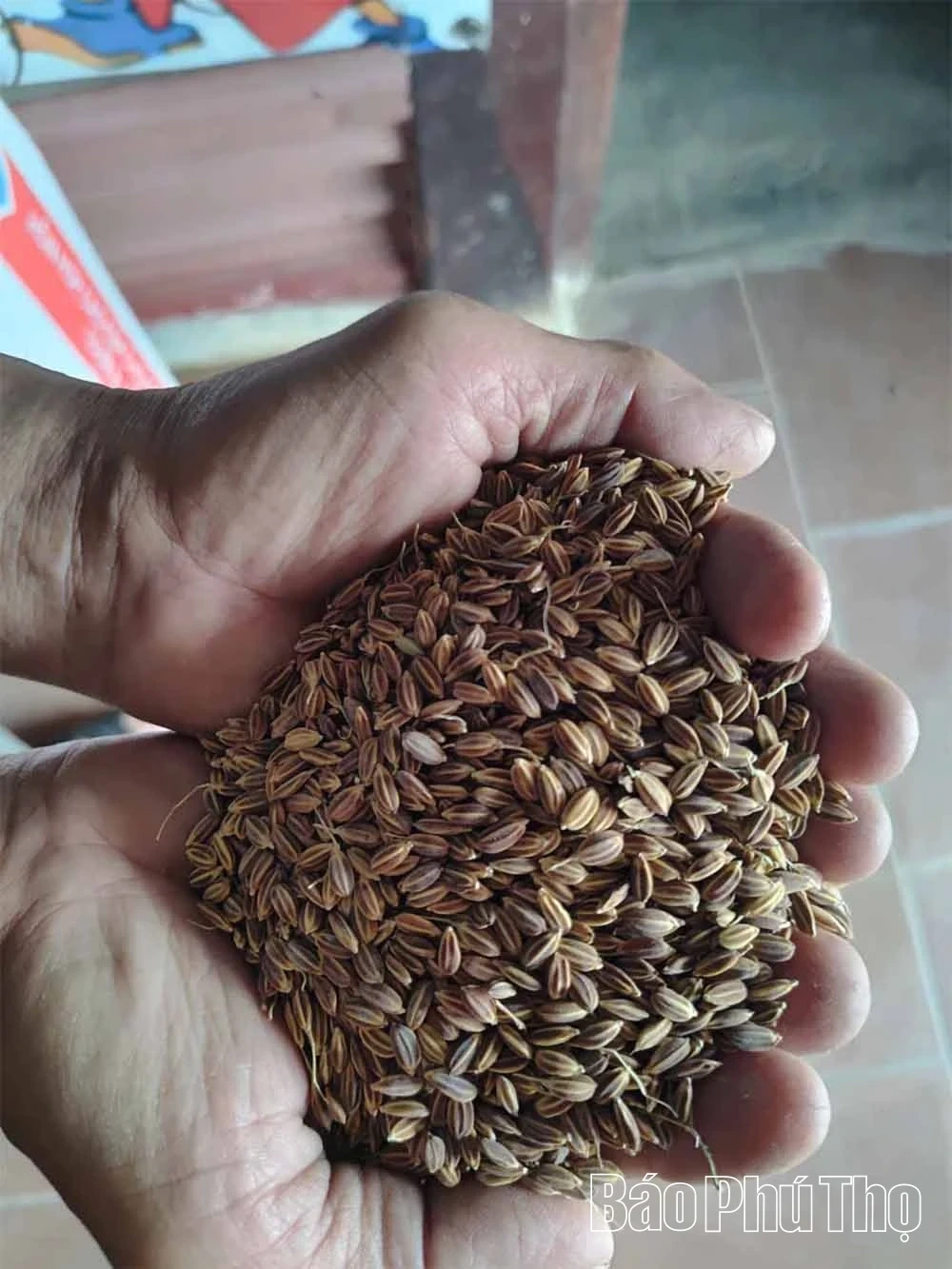
Din Van sticky rice grains feature distinctive stripes.
Din Van is a long-cycle seasonal rice. Usually planted in the 6th lunar month and harvested in the 10th, its growth period exceeds 150 days. It thrives in the specific climate and soil of Son Luong—a land blessed with cool stream water and fertile, well-drained soil.
In recent years, following policies to preserve indigenous crops, Son Luong Commune has focused on restoring and expanding the cultivation area of Din Van rice, linking production to economic value and branding.
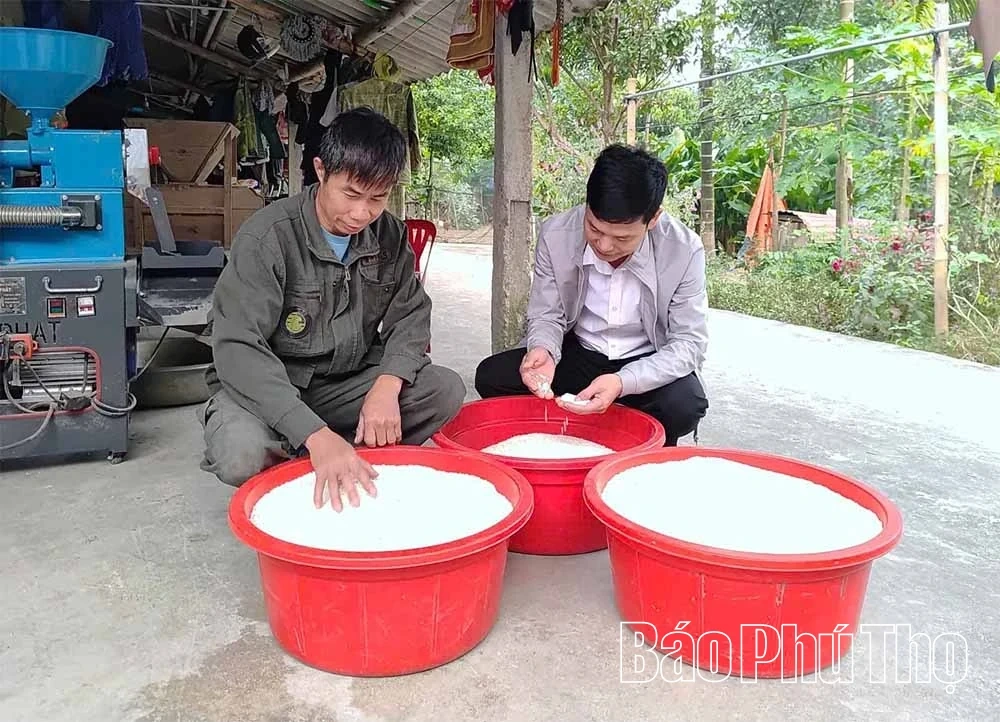
Din Van grains are plump, carrying the signature aroma of a rare indigenous variety.
Ms. Dinh Thi Thuy Huong, Head of the Economic Office of Son Luong Commune, stated: "Din Van sticky rice is not only a Muong specialty but also a precious genetic resource. The commune aims to preserve this variety through appropriate-scale commercial production, applying technical advances and building a brand with traceability, aiming for OCOP certification."
Accordingly, local authorities are guiding farmers to select suitable planting areas, maintain pure seeds, and apply safe farming processes by limiting chemical fertilizers and pesticides to ensure the rice’s original quality and flavor.
For the Muong people of Son Luong, Din Van rice is more than food; it is the “pearl of the mountains,” a cultural memory linked to their ancestors and village. In modern life, preserving this precious rice is a way to protect their identity while opening a sustainable path for the local agricultural economy.
Hoang Huong

baophutho.vn In the school environment, folklore education is no longer confined to dry textbook pages; instead, it has become an emotional and visual...

baophutho.vn To prepare a "Mr. Cau" (a respectful name for fighting buffaloes) for the annual festival, buffalo raisers in Hai Luu Commune travel far and...

baophutho.vn On the evening of February 27, Phung Nguyen Commune officially opened the 2026 Tro Tram Festival for the Year of the Horse.

baophutho.vn As one of the three pillars of Vietnam's comprehensive diplomacy, cultural diplomacy is considered a vital field in foreign policy, implemented...

baophutho.vn On February 24-25 (the 8th and 9th days of the first lunar month, Year of the Horse), the People’s Committee of Hoa Binh Ward solemnly...

baophutho.vn In the era of the Fourth Industrial Revolution, digital transformation is not only an urgent requirement but also a vital catalyst for the...

baophutho.vn Officially opening on the 4th day of the first lunar month (Year of the Horse), the Tien pagode Festival in An Nghia Commune is one of the...

baophutho.vn As one of the most anticipated spring festivals in the province, the Au Co Mother Temple Festival in Hien Luong Commune is currently underway....

baophutho.vn Brilliant Fireworks Welcome the Year of the Horse 2026

baophutho.vn As the Lunar New Year approaches, visitors to Vinh Phu Commune are greeted by the warm golden hues of laden pomelo orchards and a delicate...
Editor-in-chief: Vi Manh Hung
License No.154/GP-BTTTT dated March 3,2022 by the Ministry of Information and Communications.
Address : No.Nguyen Tat Thanh street, Viet Tri ward, Phu Tho province
Tel: (0210) 3846.508; (0210) 3855.303
Email: info@baophutho.vn
Website: baophutho.vn
Copyrights Phu Tho Newspaper; All rights reserved
