
{title}
{publish}
{head}

Located in the majestic Northwest region of Phu Tho Province, Tan Mai Commune resembles a picturesque harmony of mountains and rivers. Blessed by nature with pristine, poetic landscapes and a rich cultural heritage of the Muong, Dao, Thai, Tay, and Kinh ethnic groups, the area holds tremendous potential for sustainable tourism development in the future.
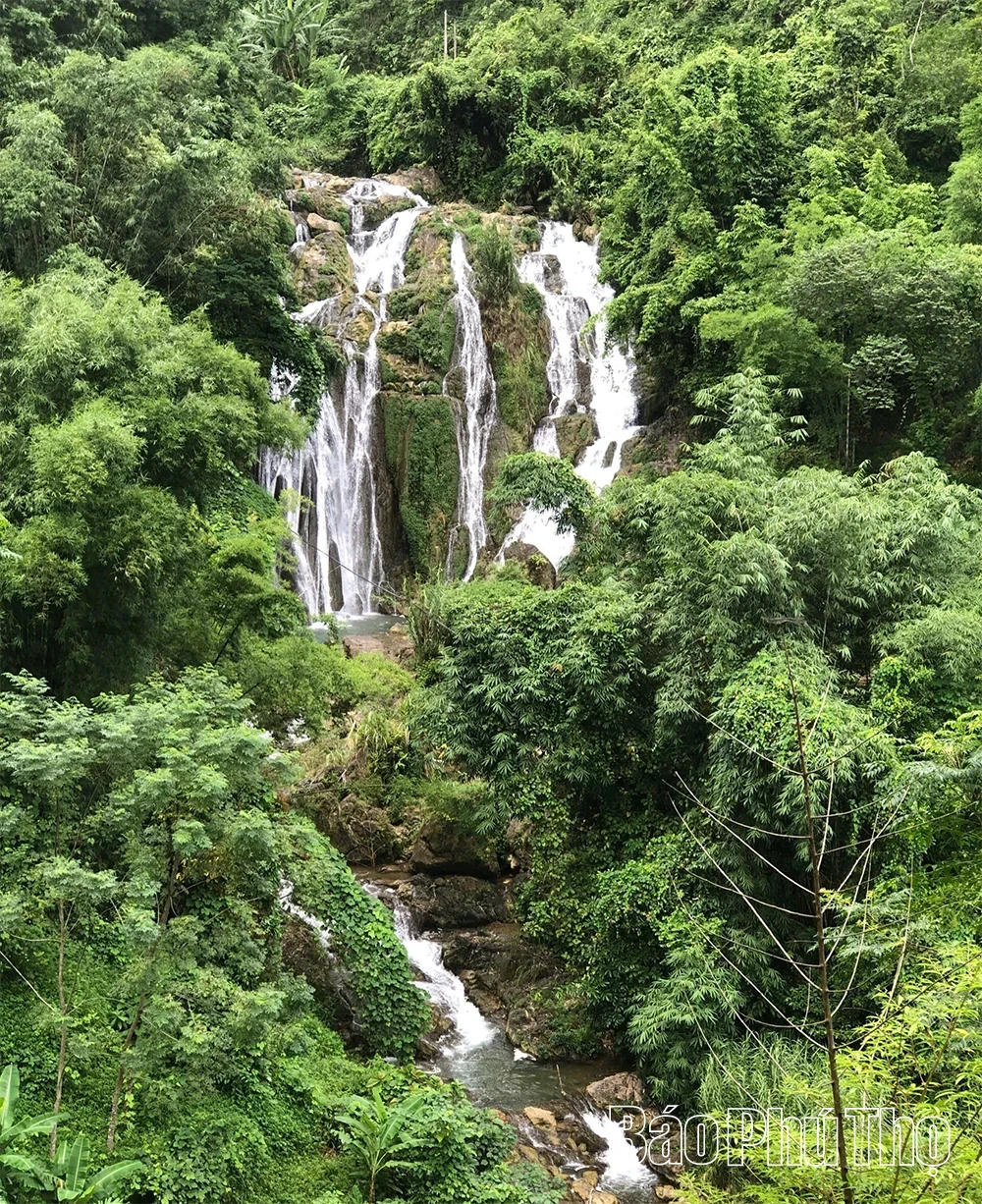
Go Lao Waterfall cascades like a white silk ribbon amid the vast Northwestern mountains and forests.
From July 1, 2025, in line with the restructuring of the local administrative system under the two-tier government model, Tan Mai Commune was established through the merger of Son Thuy and Tan Thanh communes. Covering an area of more than 130 square kilometers with a population of nearly 8,000, Tan Mai possesses rare strengths—from diverse natural resources to unique cultural identity, from poetic landscapes to the hospitality of its people.
Right from its first term (2025–2030), the Tan Mai Party Committee identified tourism development as one of its three strategic breakthroughs. This is not only an economic direction but also a long-term vision aimed at transforming potential into advantages and turning hidden beauty into widespread appeal.
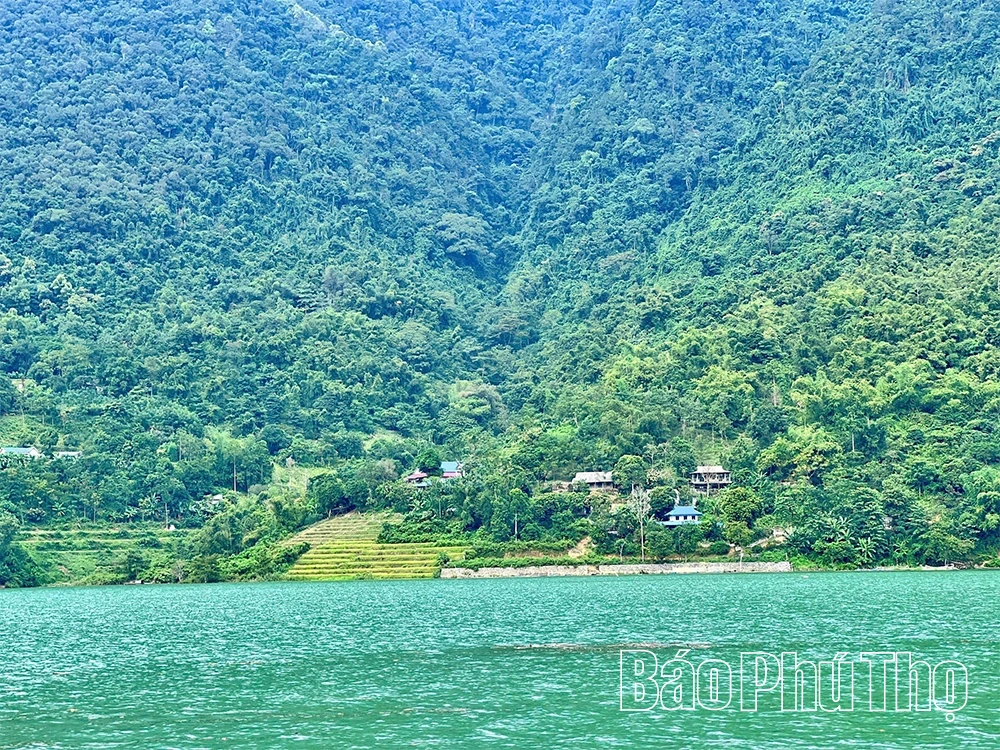
The majestic Da River flows through, carrying a refreshing breath and offering picturesque scenery. Popular tourist attractions such as Go Lao Waterfall, Suoi Lon, Mo Rut, and Ba Khan community tourism area all reflect a land favored by nature. In the early morning mist, where the sound of streams blends with birdsong, visitors feel as though they have wandered into a serene refuge where time seems to pause.
Currently, Tan Mai has seven tourist accommodation establishments, including two four-star resorts and five community-based homestays. Many households have boldly invested in converting traditional stilt houses into guest lodges—preserving local rustic charm while ensuring stable income.
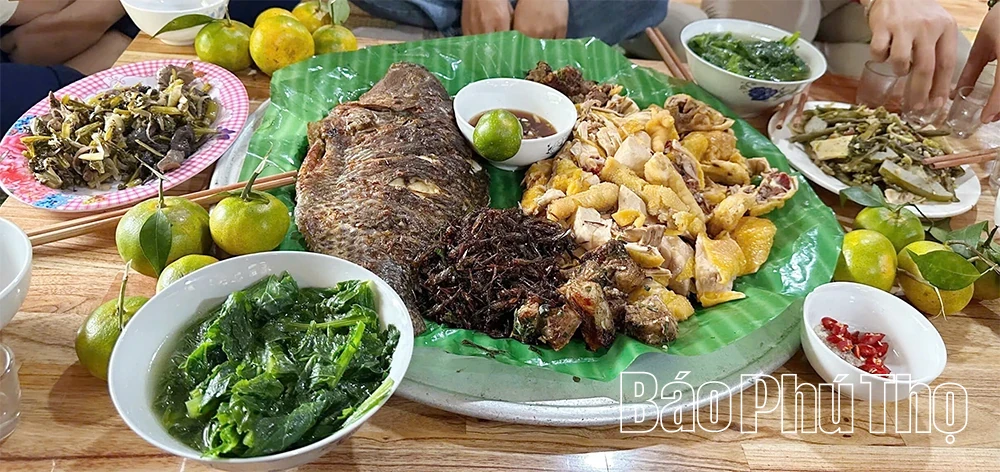
Here, visitors can savor rustic dishes embodying the flavors of the mountains, such as grilled Da River fish, indigenous pork, forest vegetables, dried bamboo shoots, Phuc San taro, Ba Khan sweet potatoes, or local mandarins—specialties that have become Tan Mai’s culinary trademarks.
Beyond its abundant nature, Tan Mai is also a place where traditional cultural values are preserved and celebrated. Unique festivals such as the Xuan Son Dong Spring Festival, the Dao “cap sac” ritual, Hai Quan Temple Festival, and Muong antiphonal singing are restored and held annually, becoming cultural highlights that attract travelers. Folk melodies, traditional dances, and the vibrant sound of gongs and drums echoing through village festival nights leave unforgettable impressions on all who visit.
To effectively harness its tourism potential, Tan Mai focuses on regional connectivity by developing attractive routes such as Tan Mai – Van Ho (Son La), Ba Khan – Buoi Cai (Muong Bi), and Den Bo – Hang Mieng. These linkages not only expand the tourism landscape but also create seamless experiences, allowing visitors to explore scenic beauty while learning about local cultures, thereby promoting the image of Phu Tho Province in general and Tan Mai in particular.
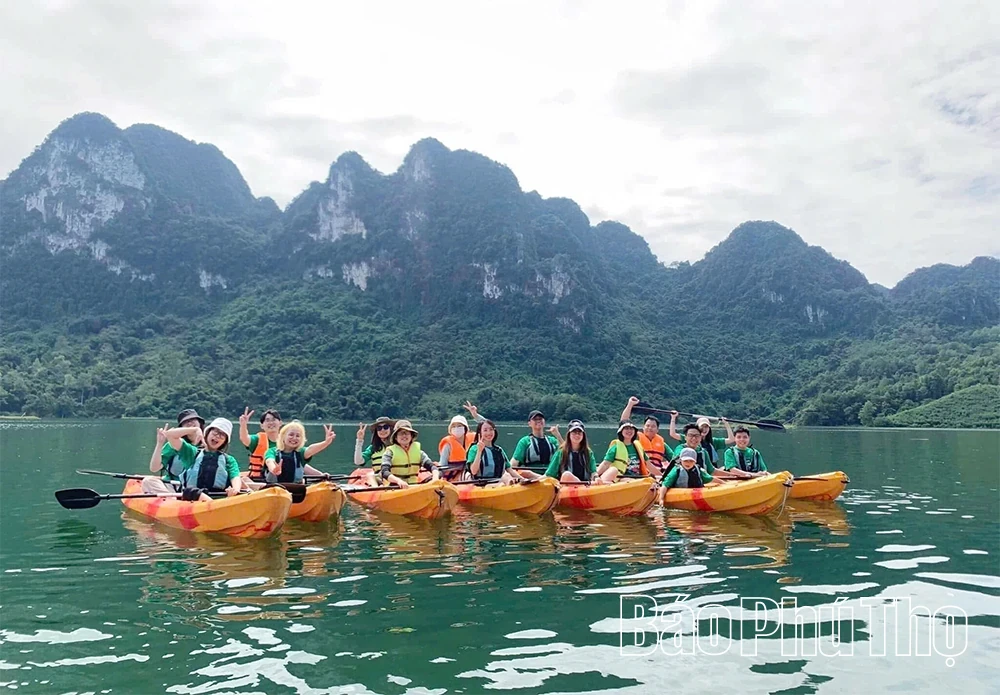
Visitors enjoy kayaking.
Thanks to the right development strategy, tourism has been and continues to be a new driving force for the local economy. Many households who once relied solely on upland farming have shifted to community tourism—opening homestays, working as tour guides, or selling local products. Residents’ income has increased significantly, living standards have improved, and the rural landscape is transforming day by day.
Thanh Loan

baophutho.vn Nestled amid the mountains and forests of Cao Phong, Mung Village possesses a poetic, peaceful beauty with terraced rice fields winding along...

baophutho.vn In the first 9 months of 2026, Thung Nai welcomed approximately 270,000 visitor arrivals; tourism revenue reached 72 billion VND, fulfilling...

baophutho.vn Leveraging advantages in cultural heritage, natural landscapes, and ethnic minority cultural identity, Phu Tho is actively stepping up tourism...

baophutho.vn As of the end of Q3/2026, total retail sales of goods and consumer service revenue across the province were estimated at over 129,401 billion...

baophutho.vn Within the new development space, tourism in the Ancestral Land is experiencing strong breakthroughs with many positive signals, affirming its...

baophutho.vn On October 13, a provincial delegation led by Comrade Bui Van Quang — Permanent Deputy Secretary of the Provincial Party Committee — inspected...

baophutho.vn Nestled amid lush green midland hills, the Long Coc Tea Hills are becoming an attractive destination for tourists exploring Phu Tho. Successive...

baophutho.vn On the evening of October 9, at the Lac Village community courtyard (Mai Ha Commune), the Department of Culture, Sports, and Tourism of Phu Tho...

baophutho.vn Continuous buses bring tourists back to the Ancestral Land. Some seek heritage sites, others ascend mountains for relaxation, while many select...

baophutho.vn Identifying tourism as an economic sector with high spillover potential, Phu Tho province is concentrating on mobilizing resources to invest in...
Editor-in-chief: Vi Manh Hung
License No.154/GP-BTTTT dated March 3,2022 by the Ministry of Information and Communications.
Address : No.Nguyen Tat Thanh street, Viet Tri ward, Phu Tho province
Tel: (0210) 3846.508; (0210) 3855.303
Email: info@baophutho.vn
Website: baophutho.vn
Copyrights Phu Tho Newspaper; All rights reserved
