
{title}
{publish}
{head}

During the first six months of 2026, Phu Tho Province recorded strong economic performance, reflecting not only the resilience of its economy but also the initial benefits of expanding its development space following the merger. The integration of resources into a unified administrative entity is creating new opportunities for growth, gradually shaping dynamic growth poles with broader spillover effects and providing fresh momentum for rapid and sustainable development.
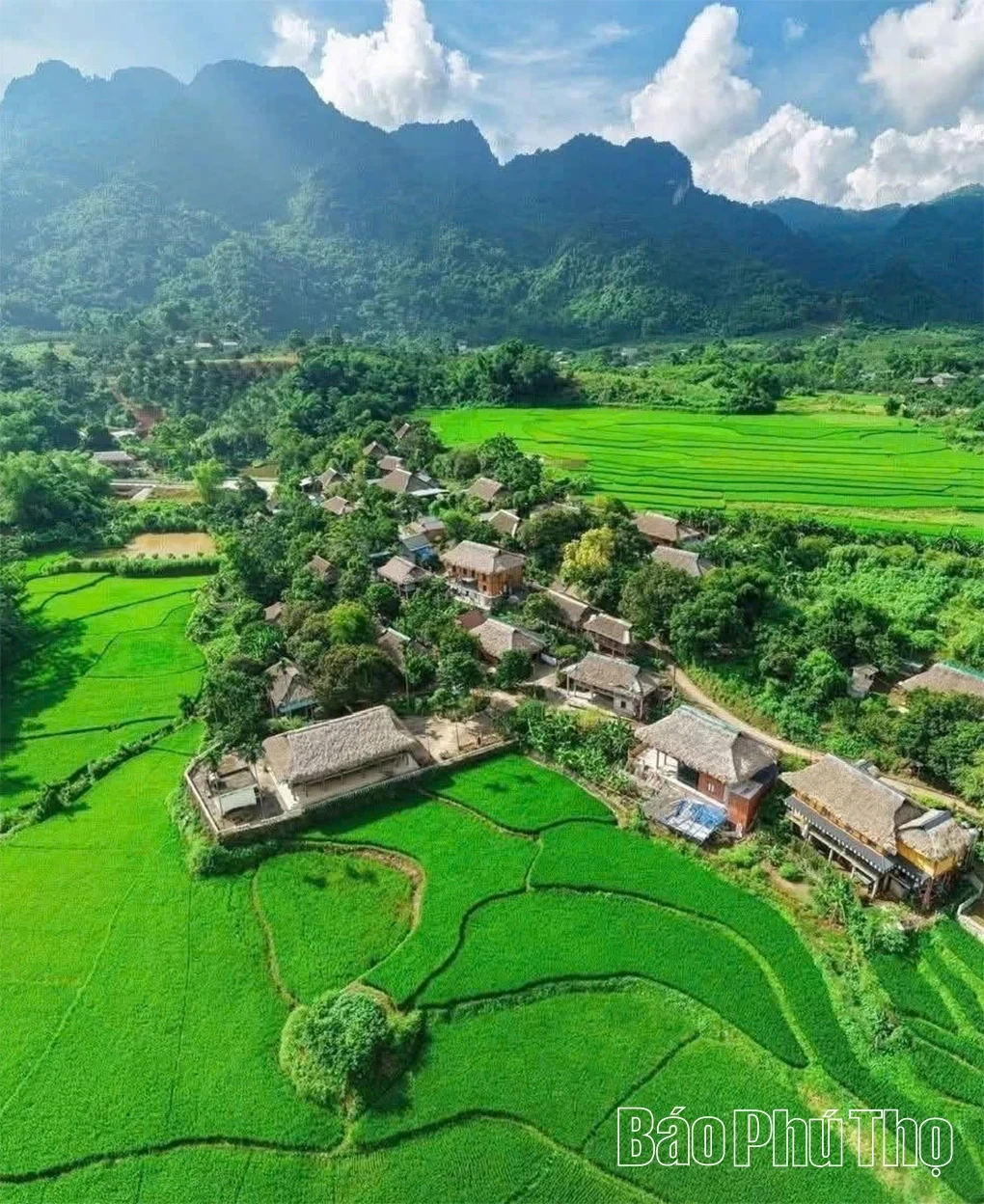
The province’s western growth pole leverages its natural landscapes, cultural heritage, and ecological resources to develop high-quality resort tourism.
Creating a New Development Space
Before the merger, each locality primarily pursued development based on its own strengths and within its own boundaries. Following the merger of Phu Tho, Vinh Phuc, and Hoa Binh provinces, the new province has gained greater capacity to plan and reorganize its economic space on a larger scale. This enables the integrated development of industry, services, agriculture, and tourism under a unified strategy, improving resource efficiency and creating stronger drivers of economic growth.
As a result, the industrial parks in the southeast, the administrative and service center of Viet Tri, and the western ecological region are no longer developing as isolated areas but are gradually becoming interconnected links in the province’s economic value chain. This integration facilitates a more efficient allocation of investment, labor, infrastructure, and market resources while creating new opportunities for regional development and new engines of growth.
The province’s economic performance in the first half of 2026 clearly demonstrates this direction. Industrial production remained the primary growth driver, with the Index of Industrial Production (IIP) increasing by approximately 25.7%, led by strong expansion in the manufacturing and processing sector. Investment attraction also delivered impressive results, with total foreign direct investment (FDI) reaching approximately $1.77 billion, exceeding the annual target and nearly five times higher than the same period last year. The investment climate continued to improve through initiatives such as the “Green Lane”, “24-Hour Green Lane”, the “Entrepreneurs' Coffee” program, and various business support measures.
At the same time, infrastructure development has remained a priority. Construction of key transportation projects linking different parts of the province has accelerated, several new industrial parks have received investment approval, and the network of industrial clusters continues to expand, creating favorable conditions for attracting large-scale manufacturing projects. These developments provide an important foundation for expanding the province’s development space through greater connectivity rather than fragmented growth.
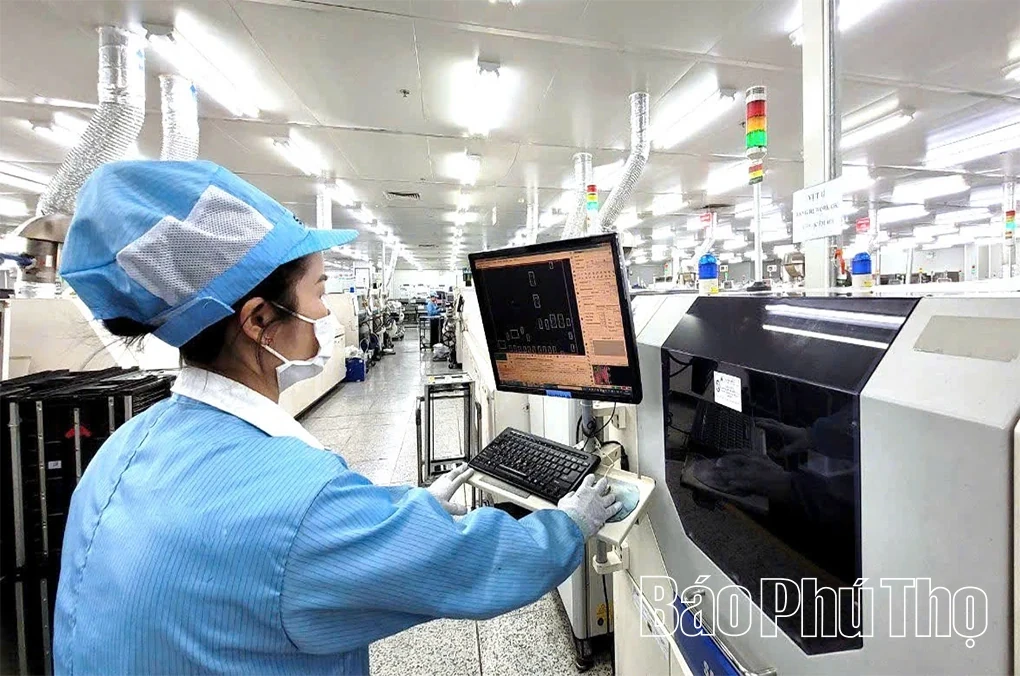
Solum Vina Co., Ltd., located in Ba Thien II Industrial Park, is a highly successful FDI enterprise specializing in the production of electronic components and telecommunications equipment.
Another bright spot in the province’s economy has been the strong growth of the business sector. During the first six months of 2026, 2,800 new enterprises were established with total registered capital of approximately VND 30 trillion, while 665 businesses resumed operations. These figures reflect the confidence of the business community in the province’s investment environment and the development prospects offered by the newly integrated economic space.
From a planning perspective, Phu Tho is gradually shifting from a single-center growth model to a multi-polar development structure. Each region capitalizes on its own comparative advantages while remaining interconnected through transportation infrastructure, logistics networks, and supply chains. This integrated approach allows economic growth to spread across the province, enabling localities to benefit collectively rather than competing individually for investment.
The development of these growth poles also aligns with the province’s long-term vision, which extends beyond industrial expansion to encompass coordinated development of services, urban areas, logistics, high-quality agriculture, and the green economy. This will strengthen Phu Tho’s competitiveness, maximize the advantages of the merged province, and reinforce its role as a major development hub in Vietnam’s Northern Midlands and Mountainous Region.
Three Growth Poles Shaping a New Economic Landscape
The first growth pole is the high-tech industrial hub in the southeast, centered on Binh Xuyen, Phuc Yen, and Tam Duong. This area is home to a modern industrial park system and enjoys direct connections to the Hanoi Capital Region, Noi Bai International Airport, and major expressways. Following the merger, these advantages have become even more significant, transforming the area not only into a manufacturing center but also into a strategic hub connecting raw material sources, services, and logistics across the province.
This area has made a major contribution to the province’s investment performance. During the first half of 2026, Phu Tho attracted approximately $1.77 billion in FDI, nearly five times higher than the same period last year, while export turnover was estimated at $22.04 billion. These figures demonstrate that industry remains the province’s principal growth engine and underscore the attractiveness of the investment environment after the merger.
Meanwhile, the Viet Tri–Phu Ninh–Lam Thao growth pole is steadily strengthening its role as the province’s center for industry, services, and innovation. Besides serving as the political, administrative, educational, and healthcare hub, the area is home to major industrial parks such as Thuy Van, Phu Ha, and Cam Khe, alongside an expanding network of industrial clusters.
This growth pole not only generates greater added value but also accelerates urbanization through the development of new urban areas, commercial centers, and services supporting workers. Consequently, economic development is no longer confined to industrial parks but increasingly spreads across multiple sectors.
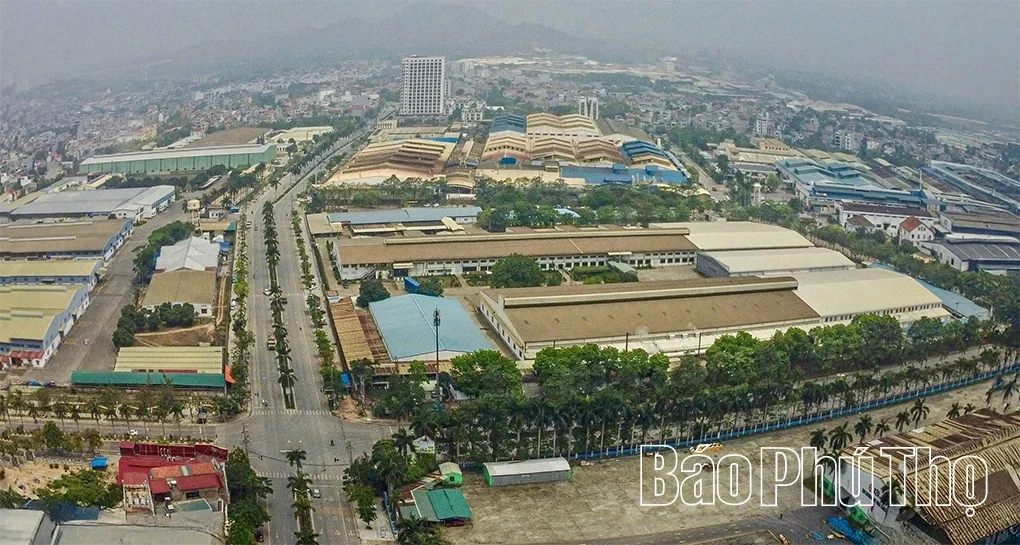
The province’s southeastern growth pole is home to a modern industrial park network with strategic connections to the Hanoi Capital Region, Noi Bai International Airport, and major expressways.
In the west, another growth pole is gradually emerging based on the green economy. Benefiting from rich natural landscapes, distinctive cultural heritage, and abundant ecological resources, the former Hoa Binh area is developing resort tourism, high-value agriculture, forestry, and renewable energy.
The effectiveness of this development model is reflected in the province’s tourism performance during the first half of 2026, when Phu Tho welcomed approximately 10.54 million visitors and generated around VND 10.76 trillion in tourism revenue. Tourism has become not only a key economic sector in the western region but also a catalyst for growth in trade, services, agriculture, and cultural preservation.
What truly distinguishes post-merger Phu Tho is not merely the emergence of individual growth poles but the strong connectivity between them. Goods produced in the southeastern industrial parks can be efficiently transported through logistics networks, the Vinh Phuc Inland Container Depot (ICD), and Noi Bai International Airport for export. At the same time, labor, raw materials, and supporting services from the central and western regions can circulate more efficiently through the province’s increasingly integrated transportation network.
This connectivity is creating a unified value chain in which industry serves as the primary engine of growth, services generate higher added value, and the green economy supports balanced and sustainable development. Such a development model reflects a global trend in which economic growth is driven not by a single center but by a network of interconnected growth poles capable of reinforcing and complementing one another.
As these growth poles continue to benefit from modern infrastructure, a highly skilled workforce, and an increasingly business-friendly investment environment, Phu Tho will not only expand its development space but also establish sustainable engines of growth, gradually strengthening its position as a dynamic development center of Vietnam’s Northern Midlands and Mountainous Region.
Quang Nam

baophutho.vn Construction is progressing at full pace on several of Phu Tho's key transport infrastructure projects, with contractors mobilising maximum...

baophutho.vn Local authorities are stepping up land clearance efforts to ensure the Son Nam 110kV Transmission Line and Substation Project is completed on...

baophutho.vn Phu Tho Province collected more than VND 34 trillion in State budget revenue during the first six months of 2026, equivalent to nearly 60% of...

baophutho.vn To accelerate digital transformation in manufacturing and enhance the competitiveness of industrial enterprises, the Department of Industry and...

baophutho.vn On July 21, Sei Optifrontier Vietnam Co., Ltd. (SEOV), a member of Sumitomo Electric Industries of Japan, held a groundbreaking ceremony for...

baophutho.vn Achieving double-digit economic growth has never been about short-term figures alone. It must be the outcome of a resilient economy built on...

baophutho.vn As Vietnam continues to capitalize on next-generation free trade agreements (FTAs), Phu Tho Province is proactively implementing the...

baophutho.vn On the morning of July 17, the Phu Tho Provincial Steering Committee for Power Development convened a meeting to direct and expedite site...

baophutho.vn From agriculture and manufacturing to trade and services, digital transformation is creating new momentum for businesses in Phu Tho to enhance...

baophutho.vn In early July, despite persistent heavy rains, construction activities continued unabated at the Hoa Binh–Moc Chau Expressway project. Amid the...
Editor-in-chief: Vi Manh Hung
License No.154/GP-BTTTT dated March 3,2022 by the Ministry of Information and Communications.
Address : No.Nguyen Tat Thanh street, Viet Tri ward, Phu Tho province
Tel: (0210) 3846.508; (0210) 3855.303
Email: info@baophutho.vn
Website: baophutho.vn
Copyrights Phu Tho Newspaper; All rights reserved
