
{title}
{publish}
{head}

The stunning “inverted bowl” tea hills of Long Coc are no longer just a magnet for tourists and photographers; they are now a platform for local tea products to reach a wider audience. By linking ecotourism development with the promotion of local specialties, Long Coc has established a successful “2-in-1” model. This approach serves as a blueprint for other localities to leverage their unique products and natural advantages for effective economic development.
Long Coc’s tea hills currently covers 960.54 hectares of tea, with an annual output of approximately 6,230 tons. The region cultivates high-quality, high-yield varieties such as Shan tea, PH1, LDP1, LDP2, and PT14, alongside domestic varieties like Kim Tuyen and Bat Tien. Notably, over 700 hectares have been certified under VietGAP, organic, and food safety standards, with various products achieving OCOP (One Commune One Product) certification.
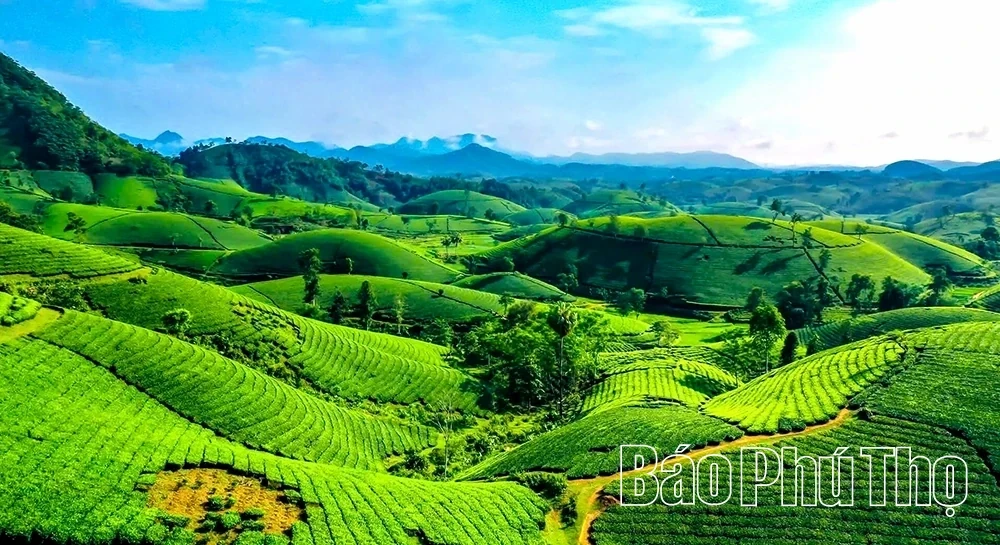
The magnificent tea hills of Long Coc are not only economically valuable but also a prerequisite for local community-based tourism.
Since the establishment of the Long Coc Safe Tea Production Cooperative in 2018 (evolved from a 2015 pilot project), the cooperative has served as a vital link in solving challenges regarding seedlings, fertilizers, technology, and market outlets. Currently, the cooperative manages 35-40 hectares and boasts six products rated as 4-star OCOP.
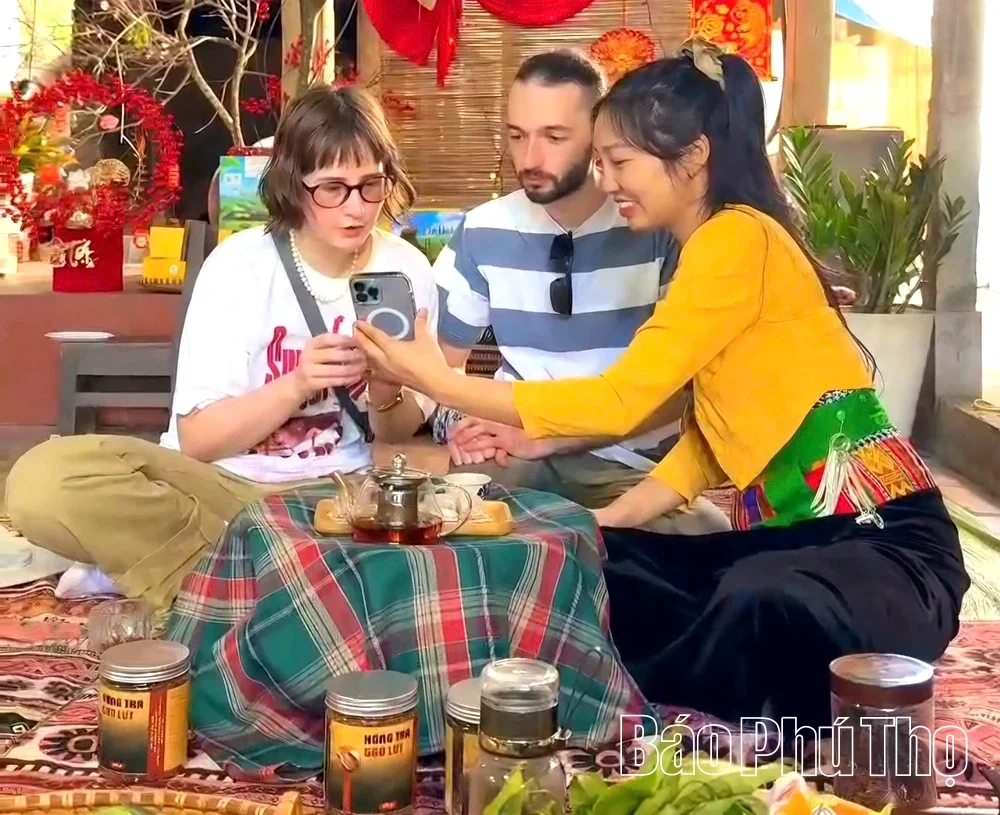
Tea products in Long Coc attract significant interest from international tourists staying at local homestays.
To meet stringent market demands, members commit to chemical-free production, avoiding herbicides, pesticides, and growth stimulants. Products such as Premium Bat Tien Tea, Specialty Dinh Tea, and Shan Tuyet Tea have solidified their presence in the domestic market. In 2024, each hectare of VietGAP tea generated an income of 80-100 million VND/year, providing stable livelihoods for local workers.
Long Coc’s tea hills attract domestic and international visitors alike. Tourists are fascinated by the scenery and the chance to experience the traditional tea-roasting techniques of the Muong people. Mr. Nguyen Tri Tu, a visitor from Hanoi, shared: "Long Coc tea has a natural aroma and a perfect balance of bitter, acrid, and sweet notes with a deep aftertaste. Experiencing the harvesting and processing directly with the locals is incredibly engaging."
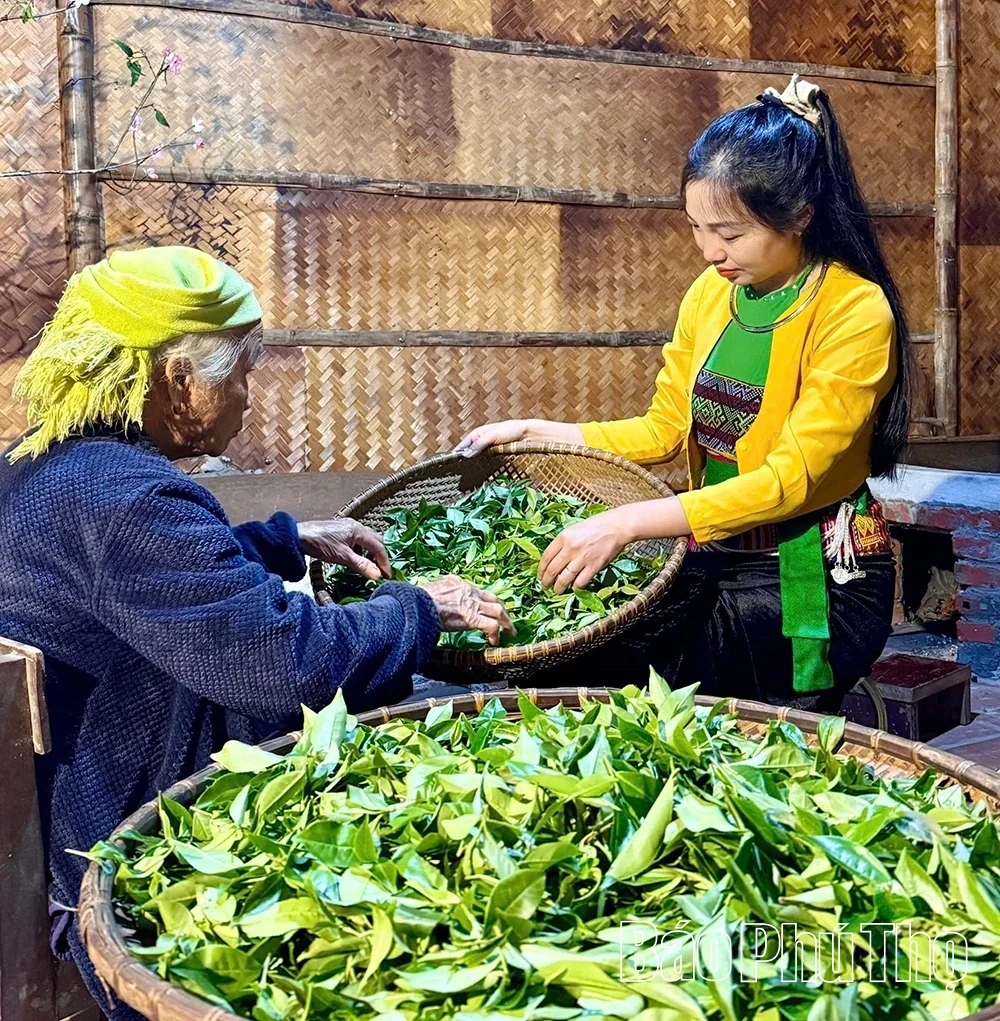
Tea production in Long Coc is now integrated into travel tours as a highly sought-after experiential product.
Despite its potential, Mr. Nguyen Xuan Viet, Chairman of the Long Coc People’s Committee, noted that tourism development has not yet fully matched the landscape’s value. Services remain small-scale and accommodation is limited during peak seasons.
In addition to direct sales at production sites, tea products have officially “hit the shelves” at various local tourist attractions. Mr. Nguyen Xuan Viet, Chairman of the Long Coc People’s Committee, shared that the continuous ecosystem of “inverted bowl” tea hills in the commune is regarded as one of the most beautiful landscapes in Northern Vietnam. However, tourism development in the area has not yet matched its potential; business and service activities remain largely fragmented; accommodation facilities fall short of demand during peak seasons; and tourism products are still somewhat monotonous. Consequently, the volume of visitors to Long Coc remains modest.
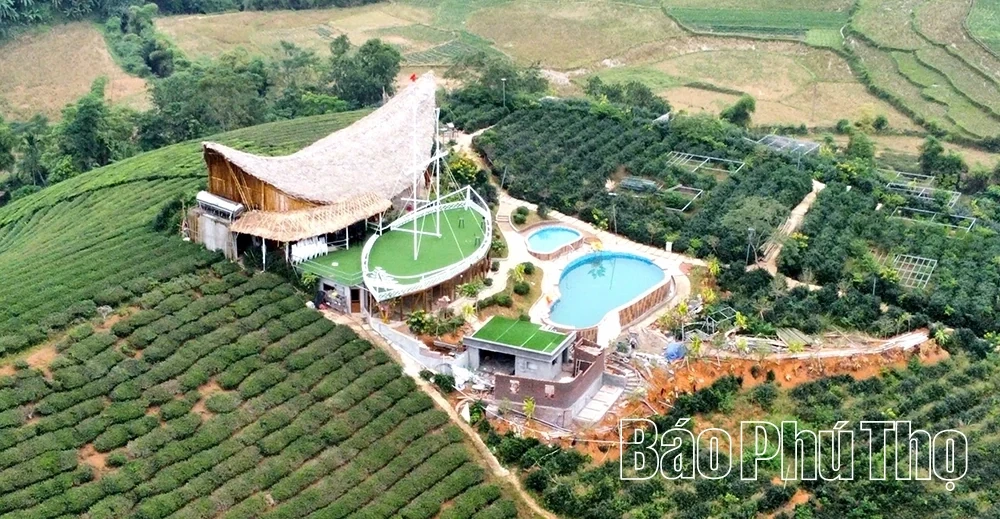
By leveraging the unique terrain, the aesthetic appeal of the tea hills, and media promotion, several community-based tourism models have emerged in Long Coc, opening up opportunities for the local “green economy” to make a breakthrough.
To effectively exploit existing potential and strengths, Long Coc is implementing the project: "Promoting Internal Strength and Attracting Investment for Economic Development linked with Green Tourism for the 2025-2030 period." Under this plan, the locality aims to have the Long Coc Tea Hills recognized as a provincial-level tourist site by 2030. It will be positioned as an attractive, friendly, and sustainable green destination with a capacity to welcome at least 50,000 visitors per year. The plan also includes developing a lodging system with 100 self-contained rooms and 10 standardized community rooms. Key tasks set forth in the project include: completing transport infrastructure to connect tourist sites; supporting enterprises and households in upgrading accommodations and diversifying tourism models; developing multi-value circular agricultural production models linked with tourism experiences and OCOP product growth; promoting the cultural identity of the Muong and Dao ethnic groups for tourism; improving landscaping and environmental protection; and intensifying the promotion of Long Coc’s image, particularly on digital platforms.
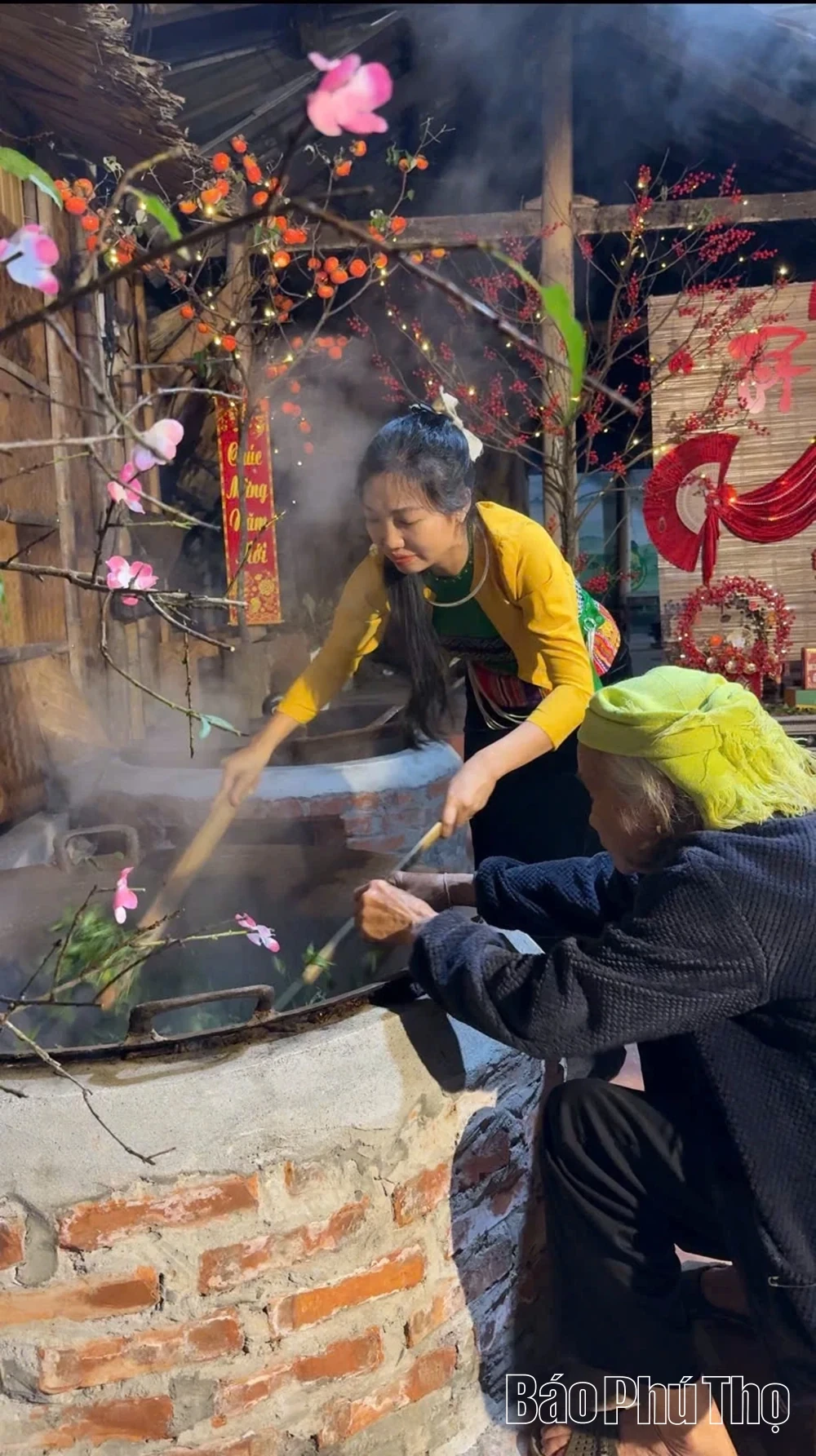
Traditional tea-roasting by the Muong people attracts tourists seeking experiential travel.
Quoc Hoi

baophutho.vn These days, the festive atmosphere has become palpable around the Du Yen Temple area (Chi Tien Commune). Along the roads leading to the...

Preserving the Trong Quan Duc Bac singing tradition

Tam Dao in the mist

baophutho.vn Every spring, the Hung Kings’ Temple Historic Site welcomes tens of thousands of respectful footsteps. Atop the sacred Nghia Linh Mountain,...

baophutho.vn Located at a significant altitude above sea level, Da Trang Pass, with its perilous curves, is often likened to a white silk ribbon draped...

baophutho.vn During this year’s Lunar New Year and early spring festival, the Au Co Mother Temple in Hien Luong Commune welcomed over 300,000 pilgrims and...

baophutho.vn One of the most unique and natural masterpieces of communal house gates in the Ancestral Land is found in Phu Hau village, Son Dong commune....

Spring celebrations with Xoe Thai dance

baophutho.vn Every spring, as the mist lingers over the surface of Hoa Binh Lake, thousands of pilgrims from across the country eagerly board boats and head...

Xoe dance – the unique cultural symbol of the ethnic people
Editor-in-chief: Vi Manh Hung
License No.154/GP-BTTTT dated March 3,2022 by the Ministry of Information and Communications.
Address : No.Nguyen Tat Thanh street, Viet Tri ward, Phu Tho province
Tel: (0210) 3846.508; (0210) 3855.303
Email: info@baophutho.vn
Website: baophutho.vn
Copyrights Phu Tho Newspaper; All rights reserved
