
{title}
{publish}
{head}

Amid the bustling currents of modern life, the traditional craft of making ca thinh (fermented fish with roasted grain powder) in Tien Lu Commune, Phu Tho Province, resiliently endures and flourishes. Far beyond a rustic dish on daily dinner tables, Tien Lu fermented fish has long become a source of local pride and a culinary “ambassador” during festivals, New Year (Tet), and family reunions. Behind that signature tangy, fragrant, and rich taste lies an inspiring story of adaptation, creativity, and the deep love for heritage harbored by farmers in this low-lying, waterlogged region.
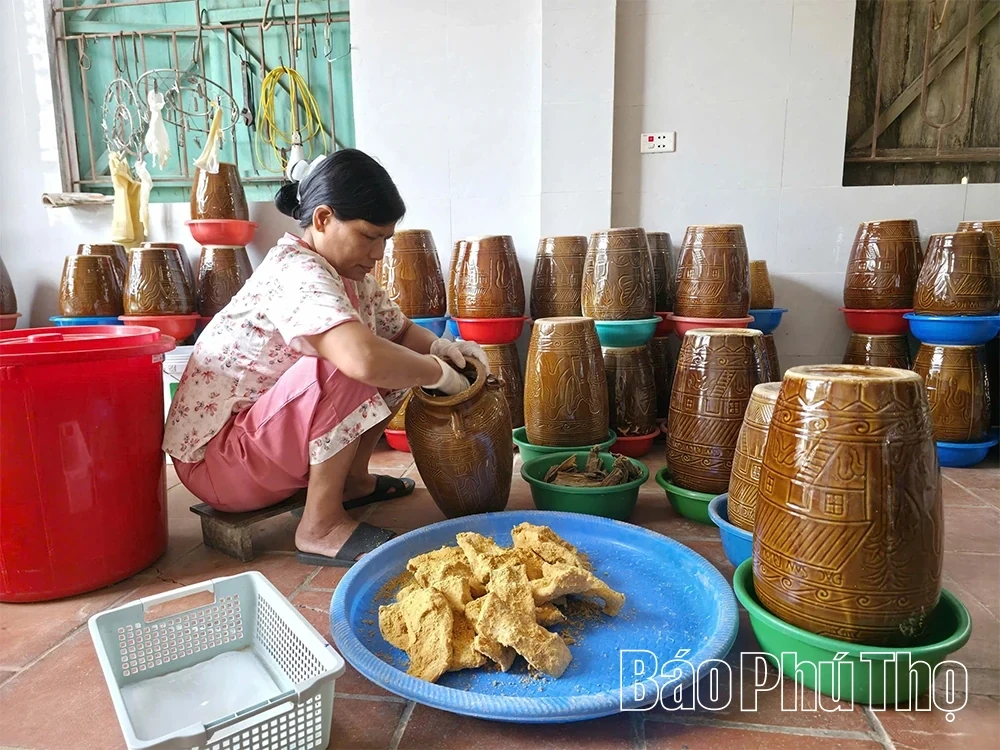
Mrs. Tran Thi Thuc from Minh Chu Hamlet, Tien Lu Commune, has dedicated nearly 40 years of her life to the craft of making fermented fish.
The Art of Meticulousness Formed by the “Quintessence” of the Homeland
Tien Lu Commune is naturally endowed with a low-lying topography. During the rainy season, fields are frequently submerged, leaving locals with only one rice crop per year. However, nature compensates this land with an abundant source of wild aquatic resources. To solve the livelihood puzzle when harvested fish could not be sold in time, the locals creatively invented the method of curing fish with salt and thinh (powdered roasted grains).
Born and raised in Minh Chu Hamlet, Tien Lu Commune, Mrs. Tran Thị Thuc has spent nearly 40 years mastering the craft. To her, ca thinh is not just a source of sustenance, but the very “quintessence” of the homeland. She opened her heart: "To produce delicious batches of fermented fish, a craftsman must pour their entire soul into it. From handpicking fresh, live mud carp, common carp, or mrigal carp—which should not be too large so that they can easily absorb the seasonings—to the initial processing steps, absolute meticulousness is mandatory."
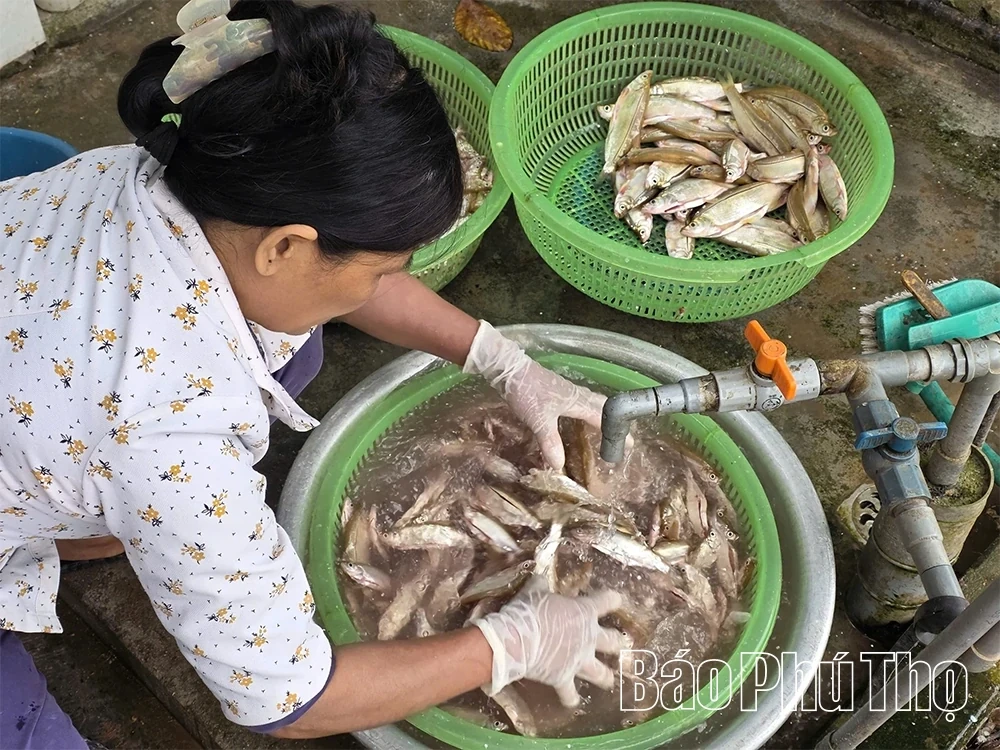
Before the fermentation process begins, fresh fish must be thoroughly cleaned and prepared.
The culinary pipeline of Tien Lu fermented fish stands as a testament to the ingenuity of local farmers. After being thoroughly gutted and cleaned, the fish is rubbed vigorously with salt to eliminate any fishy odor and firm up the flesh. Yet, the “master key” that creates the distinction lies in the golden layer of thinh. Made from roasted corn or rice ground into coarse bits, thinh requires a highly refined technique so that the grains are evenly cooked and aromatic without being burnt or underdone. The harmonious blend of the rich, nutty corn thinh and the gently fragrant rice thinh creates a standalone flavor profile for each compressed batch.
The craftsmanship shines even brighter in the fermentation stage. Tien Lu locals possess their own secrets to ensure the fish “ripens” naturally in an airtight environment. They typically line the container with clean dried areca spathes, use thoroughly crumpled sweet rice straw, and tightly seal the mouth of the clay jar with bamboo splints. The bottom of the jar is also lined with layers of guava, fig, or elephant ear fig leaves to infuse fragrance, prevent mold, and repel insects. The aging process lasts from 7 to 10 days, or even up to several months depending on the type of fish, turning the fish meat into a ripe plum color with a firm texture without using any chemical preservatives. It is this extreme meticulousness and strict hygiene in every tool—from knives, cutting boards, and basins to the earthenware jars and the craftsman’s own hands—that built the unshakeable prestige of the local brand.
Cultural Identity Amidst the Currents of Time
Mrs. Dang Thị Luan, now over 70 years old in Minh Chu Hamlet, with over 50 years of experience handling fermented fish, shared: "The origin of this dish traces back to the flood seasons in the fifth and tenth months of the lunar calendar. Back then, markets were far away and boats were scarce; the locals had no choice but to preserve fish with salt, thinh, and guava leaves. This specialty boasts a deep sweetness and crunchy, fragrant thinh, which has become the taste of childhood for generations of Tien Lu natives."
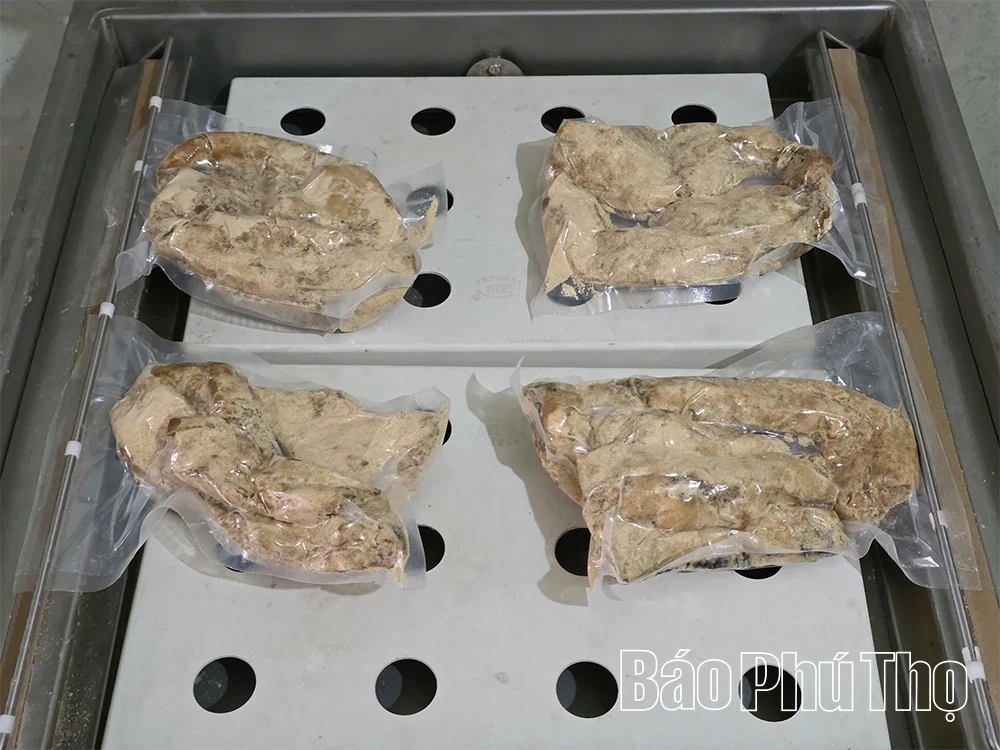
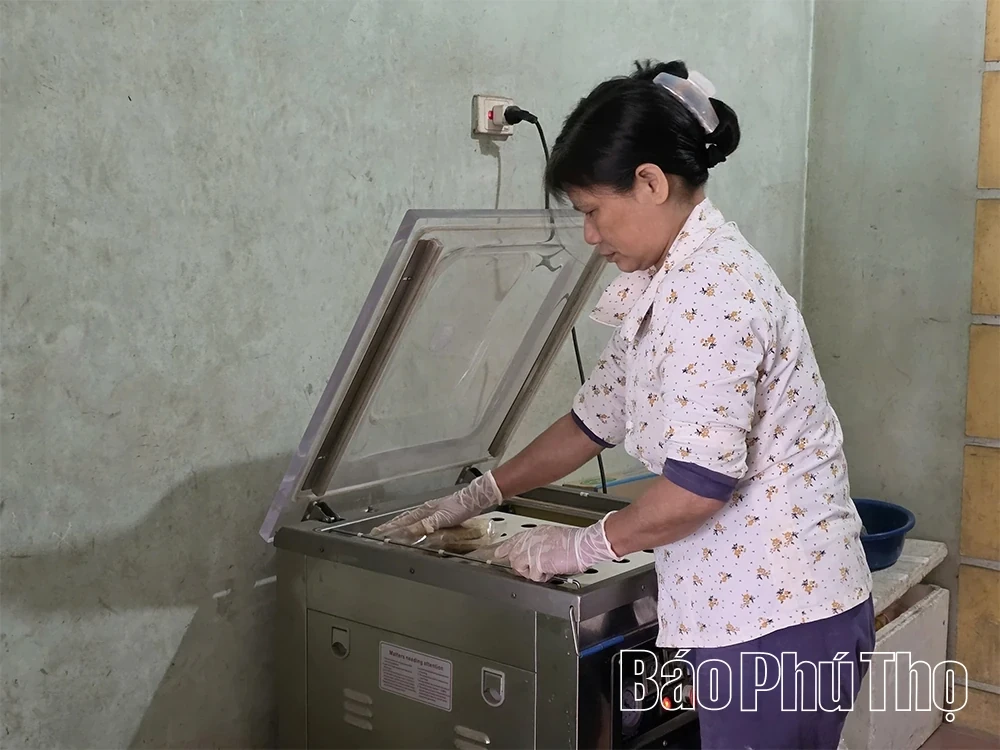
Craft households in Tien Lu proactively innovate their processing workflows, placing heavy focus on branding and packaging to promote the Tien Lu fermented fish trademark.
No longer confined to family kitchens, Tien Lu fermented fish has now transformed into a sought-after specialty gift coveted by travelers from afar. Ms. Tran Thi Thu Huong, a visitor from Hanoi, delightedly shared: "Savoring a piece of fermented fish grilled over charcoal, the intense aroma of roasted thinh blending with the natural, gentle sourness truly awakens the palate. It is an incredibly unique culinary experience—a flawless symphony of salty salt, rich and savory fish meat, and the subtle astringency of the accompanying guava and fig leaves."
Against the backdrop of an increasingly diverse food market, craft households in Tien Lu have proactively innovated their pipelines, focusing heavily on labels and packaging to elevate professionalism while preserving traditional core values. This rustic dish now shines not only at local family reunions but also graces the menus of restaurants and eateries in Hanoi and neighboring provinces.
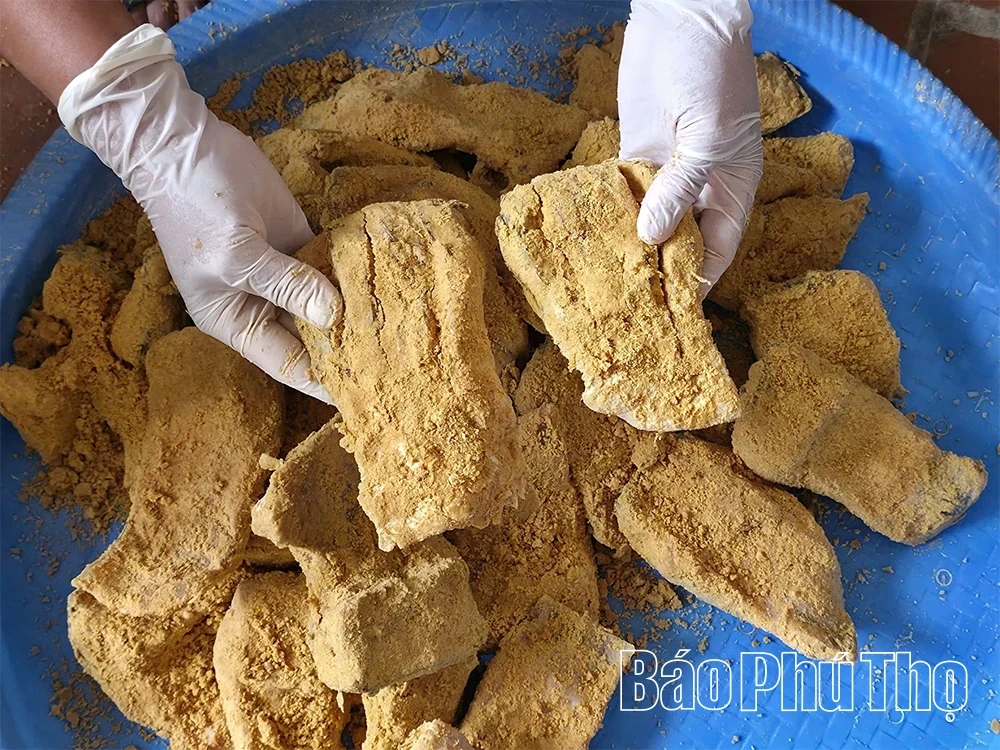
Tien Lu fermented fish—a unique and signature culinary specialty of the Phu Tho midland region.
The value of the fermented fish craft stretches far beyond economic returns; it serves as a vital bridge connecting the past and the present. It stands as a living proof of folk wisdom and cultural identity that deserves to be cherished and promoted. By preserving this craft, Tien Lu residents do not merely hold onto the “soul of the land, flavor of the homeland,” but actively contribute to spreading the essence of Vietnamese cuisine to the wider community.
If you ever have the chance to visit the low-lying region of Tien Lu, you can personally compress each piece of fish and listen to rustic stories about the love for the land and its people embedded in this countryside gift. For in every golden, crispy piece of ca thinh, diners can feel not only the skillfulness and diligence of the locals but also the rich cultural depth of a highly traditional midland region.
Ngoc Thang

baophutho.vn Amidst the drifting white clouds of Tam Dao, the Mau (Mother Goddess) Temple and Vang (Golden) Pagoda complex emerges as a tranquil spiritual...

baophutho.vn Following the expansion of its development space, Phu Tho possesses a rare "tourism map," where cultural heritage, ecological landscapes, and...

Discovering the ancient Dinh Chu communal house

baophutho.vn Facing the majestic Ba Vi mountain range across the Da River, Dam Gai Lake (Lac Song zone, Yen Son commune) emerges like a landscape painting...

baophutho.vn On July 18, the Party Committee, People's Council, People's Committee, and Vietnam Fatherland Front Committee of Tam Dao commune organized a...

baophutho.vn In its new phase of development following the provincial merger, Phu Tho is steadily establishing itself as a destination where historical...

baophutho.vn As the summer sun casts its golden glow over the midland hills of the Ancestral Land, the lotus lake at Vuon Vua Resort & Villas in Tu Vu...

Tay culture in modern life

baophutho.vn With a target of welcoming 15 million visitors and generating VND 16.3 trillion in tourism revenue in 2026, Phu Tho Province is actively...

baophutho.vn Majestic, untouched natural landscapes paired with the unique cultural identities of ethnic minority communities have created a distinct appeal...
Editor-in-chief: Vi Manh Hung
License No.154/GP-BTTTT dated March 3,2022 by the Ministry of Information and Communications.
Address : No.Nguyen Tat Thanh street, Viet Tri ward, Phu Tho province
Tel: (0210) 3846.508; (0210) 3855.303
Email: info@baophutho.vn
Website: baophutho.vn
Copyrights Phu Tho Newspaper; All rights reserved
