
{title}
{publish}
{head}

Possessing advantages in its location along the Lo River, land bank, labor force, alongside specialized production areas, craft villages, and cultural resources, Hai Luu commune retains vast room for development. However, unsynchronized connecting infrastructure remains one of its largest bottlenecks. The locality prioritizes transport while preparing master planning, clean land, and essential infrastructure to expand development space and attract investment.
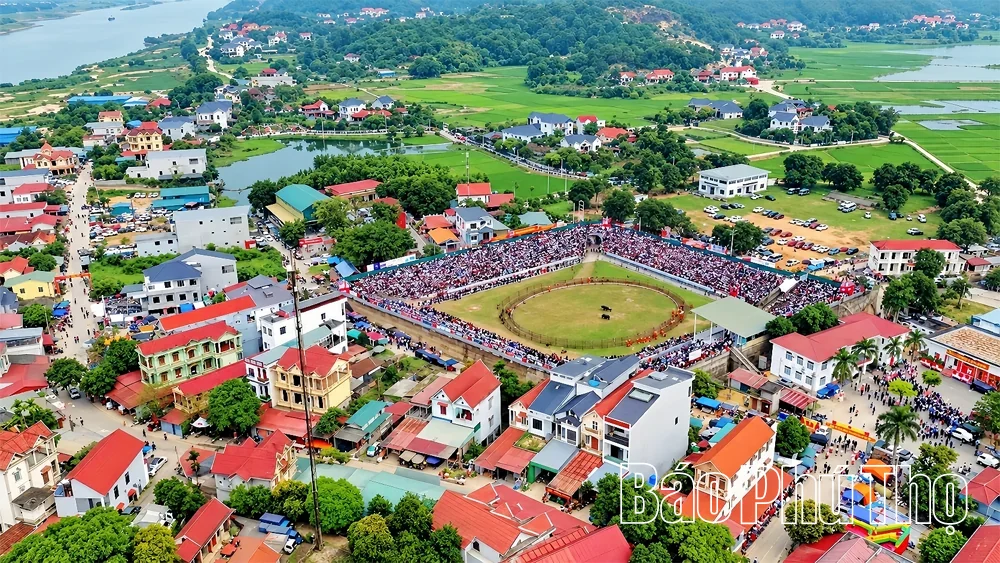
Center of Hai Luu commune.
Hai Luu possesses a fairly diverse production base featuring over 1,300 hectares of cultivated land, nearly 98 hectares of aquaculture, concentrated guava growing zones, snake farming, alongside processing facilities for agricultural products, building materials, mechanics, woodwork, and fine arts stonework. The entire commune currently hosts approximately 83 enterprises and cooperatives, along with nearly 1,600 production and business households.
According to Mr. Pho Khac Chien, Vice Chairman of the Hai Luu Commune People’s Committee, the locality’s key advantage is the convergence of land, labor, the Lo River navigation channel, established production zones, and local crafts. However, these advantages remain fragmented, while connecting infrastructure fails to satisfy development demands. To date, no major investor has officially submitted a new project proposal in the area.
One of the most evident bottlenecks is the left-bank Lo River dike route. This serves as both a disaster prevention structure and a vital transport artery connecting Hai Luu with Vinh Phu Bridge, opening access to Viet Tri and major economic hubs. However, the dike surface in many sections spans only 3.5 to 5 meters wide, with unsynchronized roadbeds and surfaces limiting heavy freight transport vehicles.
Hai Luu is petitioning for investment to upgrade and widen the dike route in a direction that combines dike safety assurance with enhanced transport capacity. If synchronously renovated, the route will shorten travel time to Vinh Phu Bridge, facilitating the transport of agricultural produce, fine arts stone, building materials, and market connections, Vice Chairman Pho Khac Chien stated.
Concurrently, the locality is focusing on resolving obstacles for the Project to Renovate and Upgrade the Transport Route Connecting Lang Cong Urban Center with Hai Luu Urban Center, specifically the section from Provincial Road DT.307 to the left-bank Lo River dike. Spanning approximately 3.77 kilometers, the project carries a total investment capital of nearly 98 billion VND. Site clearance work across the commune has reached over 90%.
The Commune People’s Committee is coordinating with the investor and relevant units to resolve remaining entanglements, striving to open the entire route to traffic within 2026. Upon completion, the project will establish a Lang Cong – Hai Luu – Left-Bank Lo River Dike connecting axis, improving trade capability and expanding development space.
Hai Luu’s viewpoint is to avoid spreading transport investments thinly, prioritizing structures capable of boosting connectivity, reducing freight transport costs, and creating development room for production, trade, and services.
For the 2026–2030 period, the locality is projected to be allocated over 209 billion VND from the province’s mid-term public investment capital; while projecting land use rights auction revenues of around 260 billion VND to supplement resources for infrastructure and essential facilities.
Among these, District Road DH.59—from Khu Le Bridge to Nhan Dao, spanning approximately 1.6 kilometers—is scheduled for renovation and upgrading with a total estimated investment of around 22 billion VND. The structure will boost connectivity between intra-field areas and the commune center, creating conditions to develop production and service activities.
“Every route opened or upgraded must fulfill objectives of strengthening connectivity, optimizing transport costs, and generating additional economic development room for residents and enterprises,” Mr. Pho Khac Chien emphasized.
Alongside transport investments, the commune is reviewing master planning and land use plans to reorganize development space. The riverside area along the Lo River, with roughly 27 kilometers of waterway, leverages advantages in water transport, cargo yards, services, and eco-tourism. The Lang Cong – Hai Luu – DT.307 axis links residential areas with trade, services, and handicrafts; while intra-field zones continue developing commercial agriculture tied to primary processing, deep processing, and consumption.
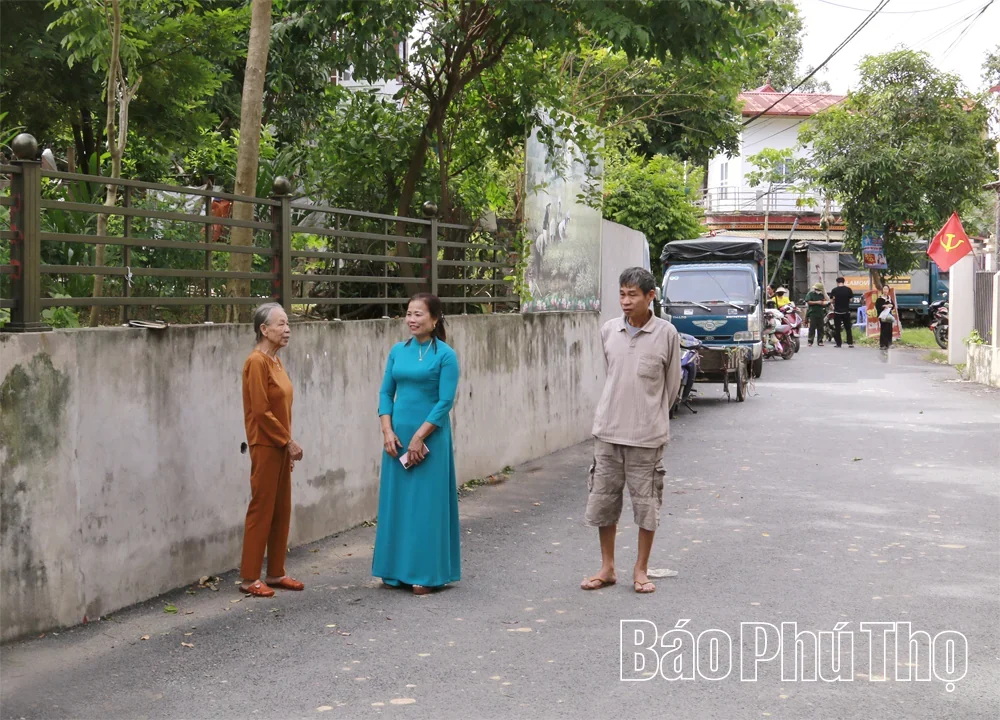
Residents of Dan Chu village contribute 100% of funding to widen two rural transport roads.
Improved infrastructure also creates conditions to better exploit the locality’s tourism resources. Hai Luu hosts the traditional Buffalo Fighting Festival alongside a system of historical relics, Lo River scenery, stone craft villages, stork gardens, guava growing regions, and signature products. Mr. Trieu Thu Hiep, Head of the Culture and Social Affairs Office of Hai Luu commune, stated that to form this product chain, alongside building service offerings, the locality is continuing to perfect internal transport networks, parking lots, and rest stops to serve visitors.
However, to attract investment, convenient transport alone is insufficient. Hai Luu currently lacks large-scale clean land funds, and its industrial zones and clusters have not been fully planned. Therefore, the locality is proactively reviewing master planning, land management, and preparing site clearance schemes; while proposing investments in a centralized clean water supply system and planning the Hai Luu Industrial Cluster with a scale of approximately 50 to 70 hectares.
Based on local advantages, Hai Luu is orienting investment attraction toward commercial agriculture, agricultural processing, stone craft modernization, trade and production-support services, and experiential eco-tourism. The principle is selecting suitable projects that generate employment, safeguard the environment, and build long-term linkages with local residents.
For Hai Luu, unblocking transport bottlenecks is not merely about making travel more convenient. What matters most is opening market connectivity, taking agricultural produce and craft village products further, and creating space to welcome new development resources. When transport improves alongside synchronized preparations in master planning, land funds, site clearance, and essential infrastructure, existing advantages can truly convert into investment appeal and development momentum.
Ngoc Tuan

baophutho.vn On the evening of September 16, Comrade Tran Duy Dong, Alternate Member of the Party Central Committee, Deputy Secretary of the Provincial...

baophutho.vn With an urban network distributed over a wide area, Phu Tho province is step-by-step reorganizing its development space toward a multi-center,...

baophutho.vn On the morning of September 16, Mr. Tran Duy Dong—Alternate Member of the Party Central Committee, Deputy Secretary of the Provincial Party...

baophutho.vn On September 15, the Provincial Union of Science and Technology Associations organized a scientific workshop to gather feedback from...

baophutho.vn On the morning of September 15, the Government Office coordinated with the Ministry of Science and Technology to organize a national online...

baophutho.vn On September 14, Mr. Nguyen Khac Hieu—Member of the Provincial Party Committee and Vice Chairman of the Provincial People’s Committee—chaired a...

baophutho.vn On the afternoon of September 11, a working delegation led by Mr. Pham Dai Duong—Member of the Party Central Committee, Secretary of the...

baophutho.vn That was the directive from Comrade Bui Thi Minh, Permanent Deputy Secretary of the Provincial Party Committee and Chairwoman of the Provincial...

baophutho.vn On the morning of September 9, Comrade Vu Viet Van, Member of the Standing Committee of the Provincial Party Committee and Vice Chairman of the...

baophutho.vn On the morning of September 8, Mr. Vu Viet Van—Member of the Standing Committee of the Provincial Party Committee and Vice Chairman of the...
Editor-in-chief: Vi Manh Hung
License No.154/GP-BTTTT dated March 3,2022 by the Ministry of Information and Communications.
Address : No.Nguyen Tat Thanh street, Viet Tri ward, Phu Tho province
Tel: (0210) 3846.508; (0210) 3855.303
Email: info@baophutho.vn
Website: baophutho.vn
Copyrights Phu Tho Newspaper; All rights reserved
